Baby’s First Year Memory Book Ideas: 15 Monthly Pages and Keepsakes
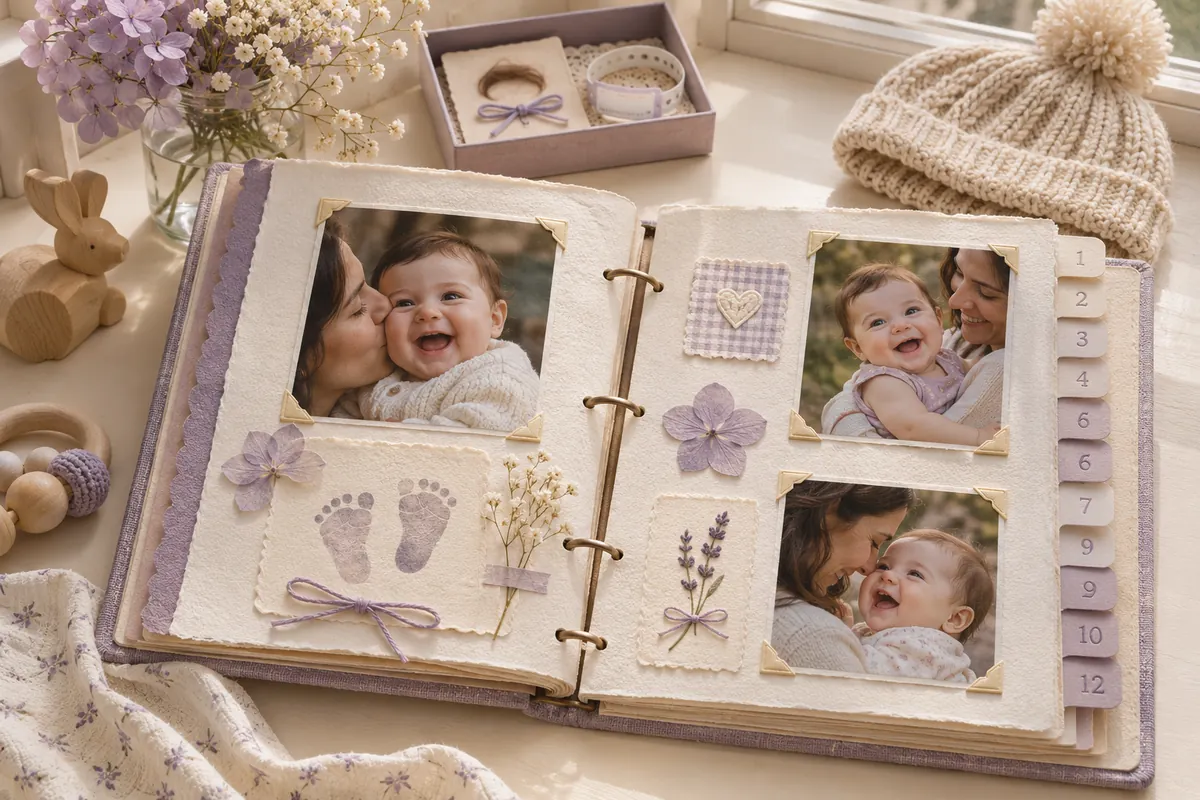
A baby’s first-year memory book can be one page for each of the first 12 months, with a birth story at the beginning and a birthday page and keepsake pocket at the end. Start with one photo and one sentence for most months. A note about the tune you sang while folding laundry can bring back more of the year than another blank milestone box. These 15 ideas give each page a clear purpose and offer prompts for months that already feel like a blur.
Set up a first-year album you can keep up with
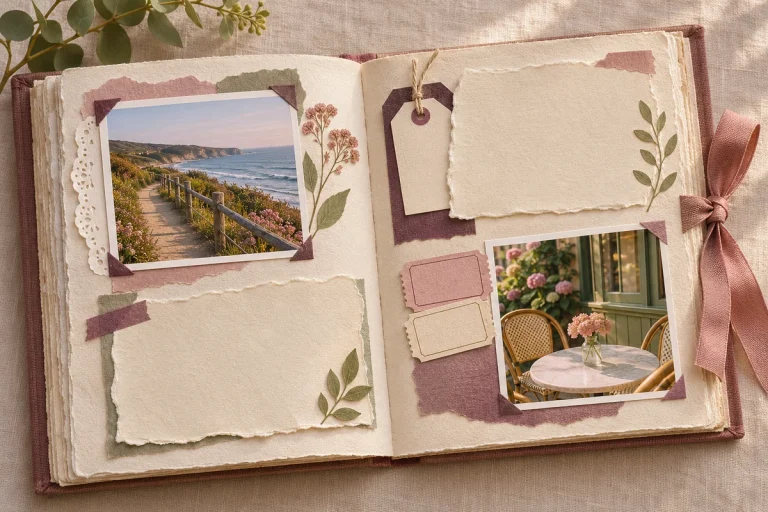
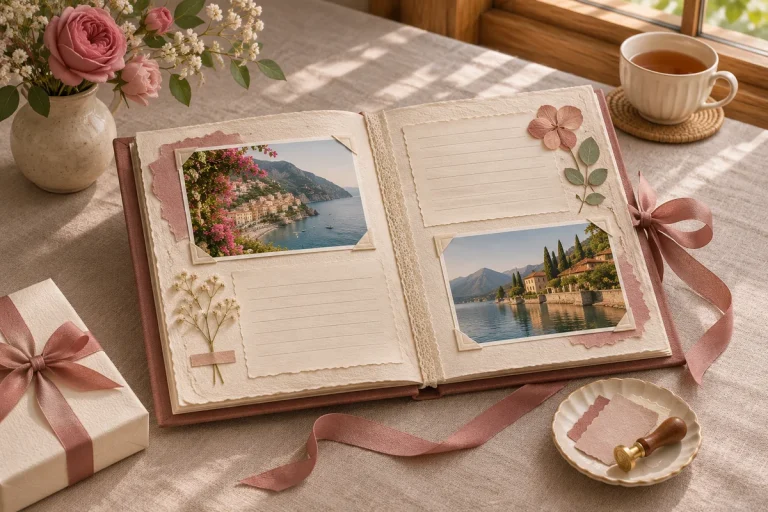
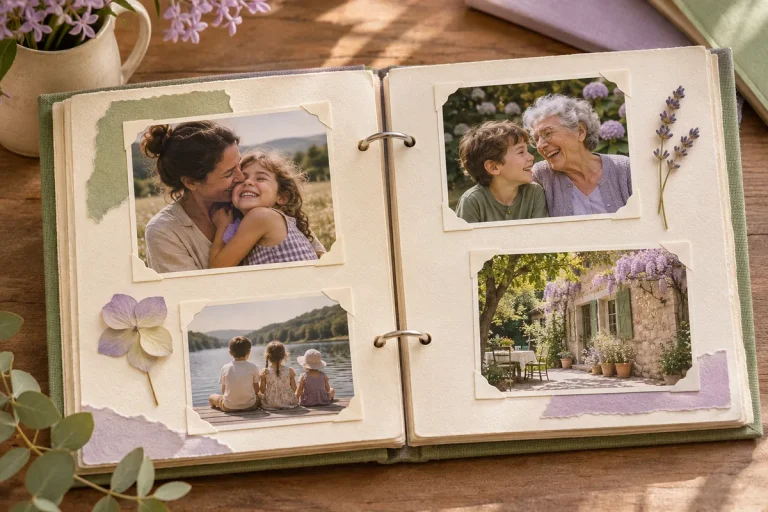
Use a ring-bound album if you expect to add pages later, or choose a slim bound book for a fixed layout. Make 12 dated tabs and leave space for the same photo size on most pages. A 4×6 photo, a line for the date, and a few lines of text are plenty for a 6×8 page. Check binding clearance before choosing your frame. Lay a blank sheet over the gutter and make sure you can reach all the writing space with the book open.
Decide which dates your labels mean. You can make “month one” the time from birth to one month old, or use the photo taken around the day baby turned one month. Put the actual dates beneath your headings so you’ll remember the convention later. If you only know a season or a range, use it. Keep a phone album with one or two favorite pictures per month, download copies you want to keep, and name a file with the month and year when you have time.
15 first-year memory book pages and keepsakes
1. A welcome page and birth story
Start with one newborn or welcome-home photo and a short account of the day from your point of view. Record a detail the calendar cannot tell you, like the color of the sky outside when you first took a picture. If measurements or other birth details feel meaningful, write them on a caption card. For any personal record you plan to photograph or share later, make a separate copy of the page with identifying details out of view.
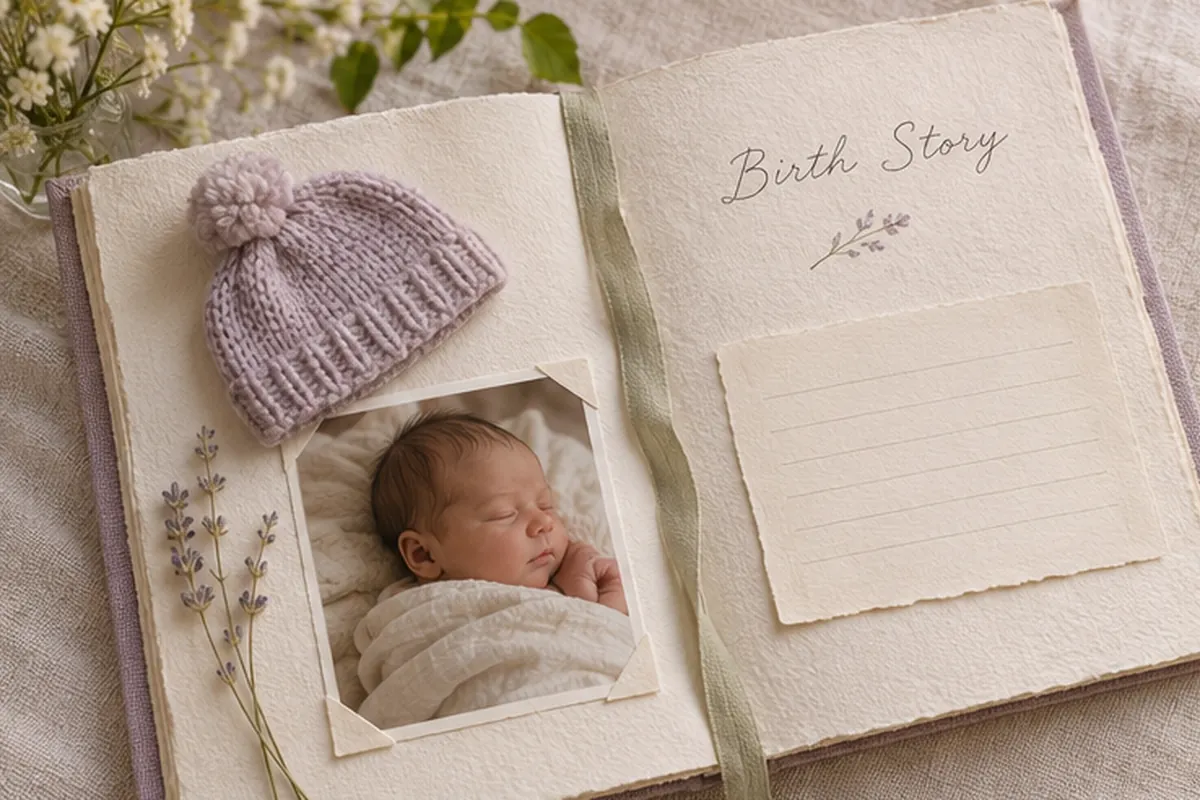
You could write a few lines about the first person you called or the song that played on the way home. If the first days were difficult or you want to keep parts of the story private, put a short public-facing note on the page and fold the longer story into a pocket just for the family. A short paragraph is enough to begin the album.
2. Month one: the first ordinary day
Use one picture from a familiar room and write down what an ordinary day felt like. Prompt yourself with “the first sound I remember hearing in the morning” or “what we kept beside the chair.” A photograph of a blanket draped over the arm of a sofa may be enough if everyone was tired and you took few pictures that week. Keep the page centered around one clear scene.
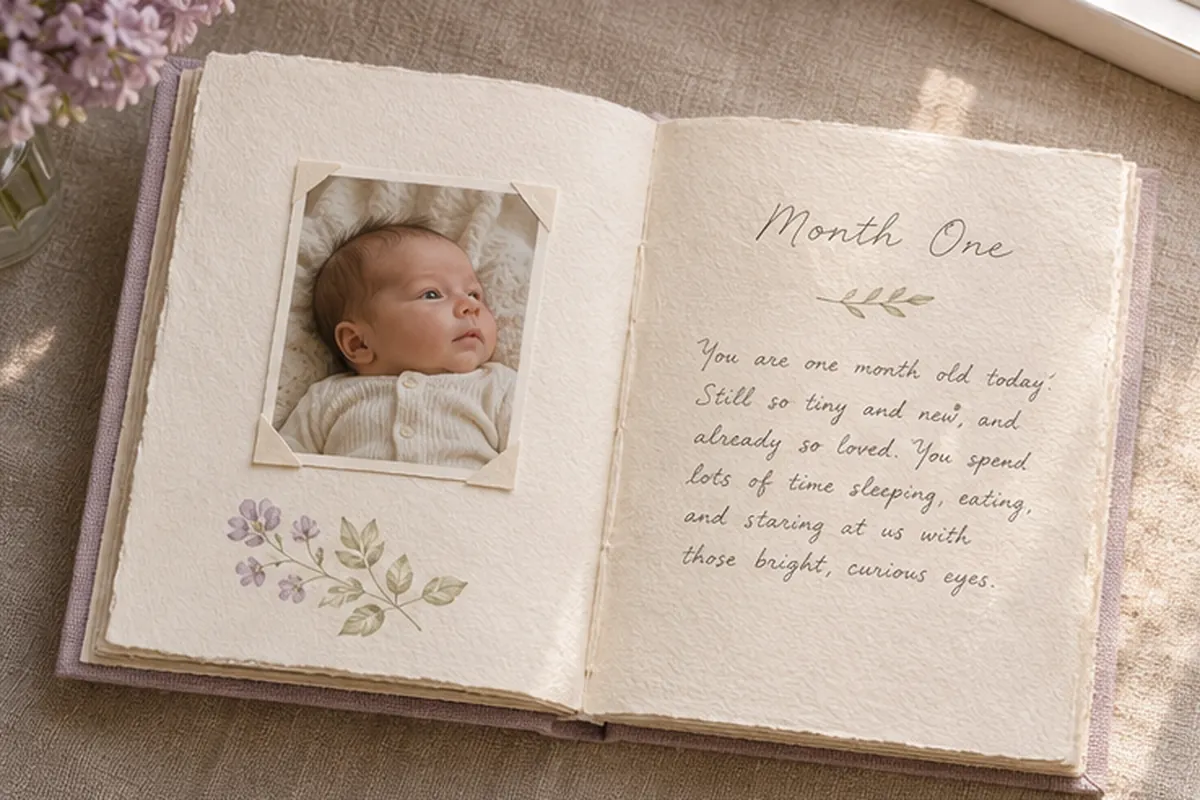
Add a narrow space for a caption beside the photo and keep the margins open. If a partner or other caregiver would like to contribute, ask them to write their own sentence on a small separate card. A second voice can give a short entry context without requiring the page to become a daily record.
3. Month two: the people who showed up
Pick a photograph of a visit, a familiar pair of hands, or a person on a video call. Write why the visit felt memorable. A line about someone sending a meal or keeping you company can be as meaningful as a formal portrait. Leave the person’s name near the photo for when other family members browse the book years later.
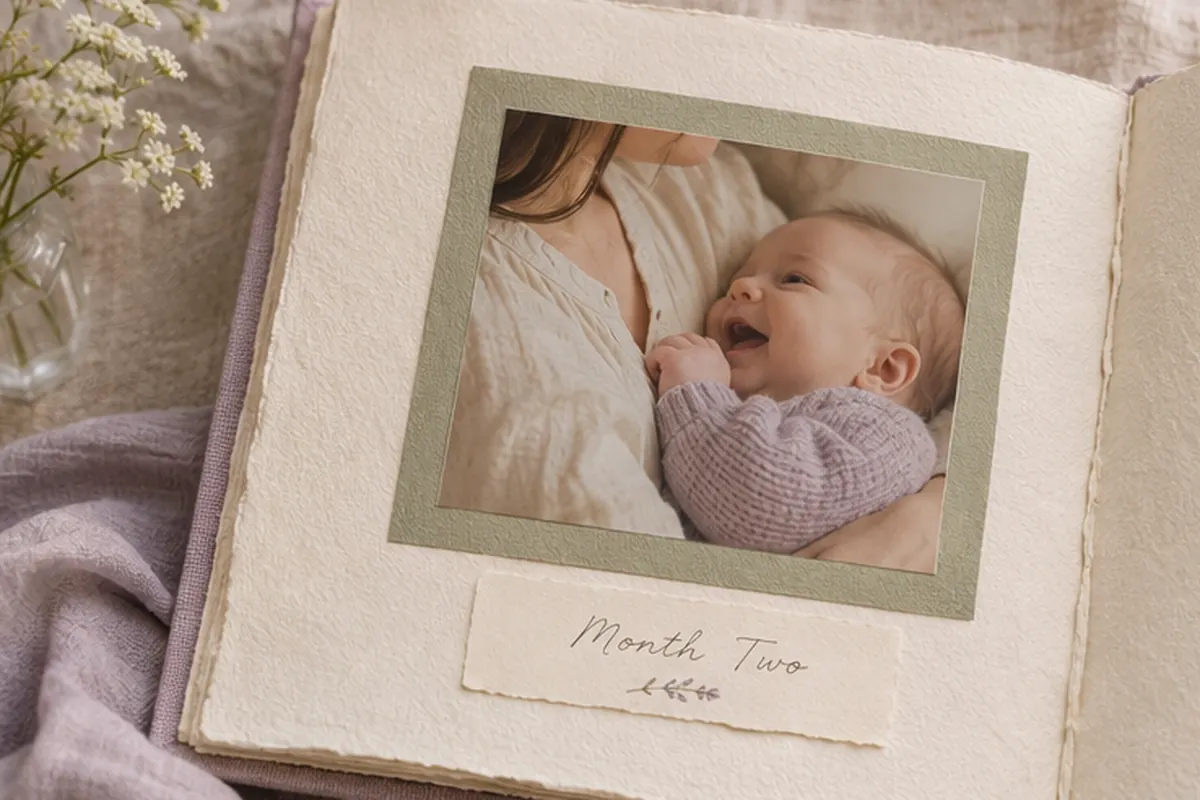
For a page without a good picture, photocopy a card and set it on a narrow mat. You might add a few words about how the card arrived or where it sat. Use first names or relationships if you expect the book to travel to gatherings and want a more private record.
4. Month three: a change you noticed
Write about one thing that felt different from the previous month. Think of a new expression, a way baby followed a voice, or a change in how you spent time together. The note can describe a little encounter, such as “we both stopped to watch the light move on the wall.” Put the month in the margin and keep any uncertain dates approximate.
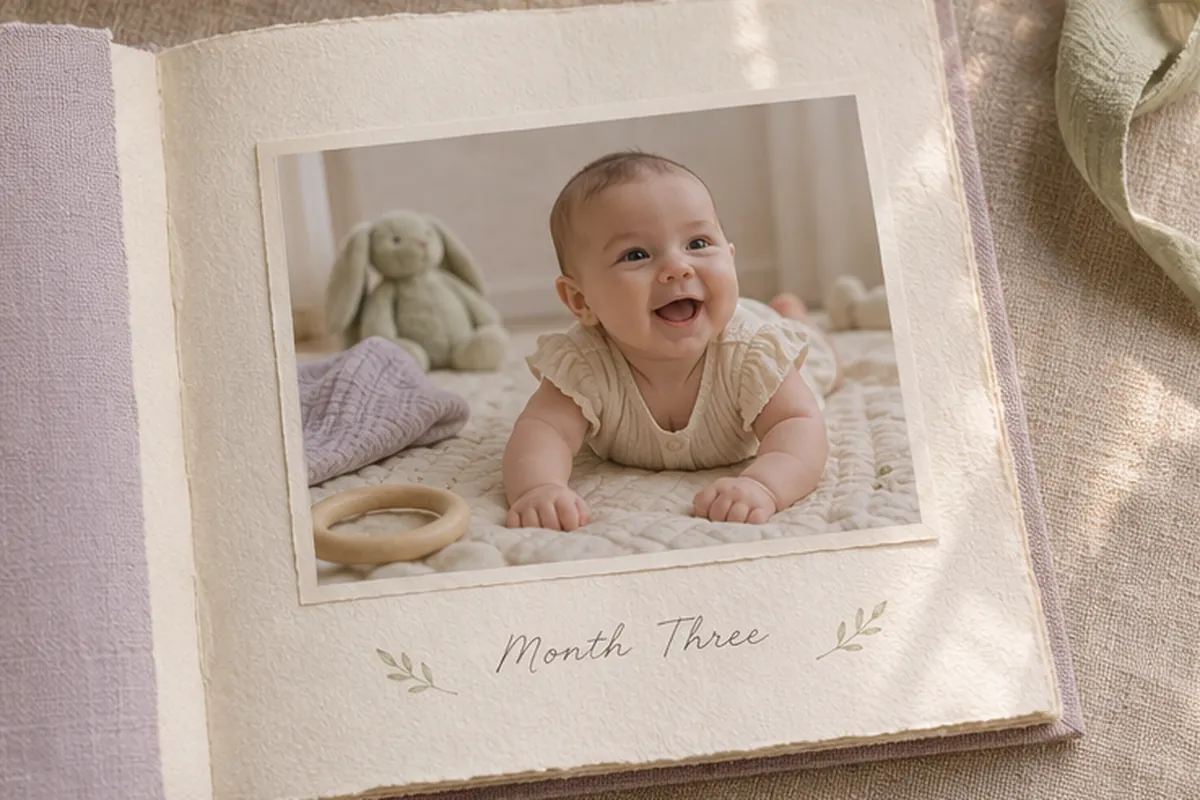
Use two pictures from the same place if they help show the change. A similar camera angle makes the comparison easier, but the caption can connect images from different days. Some months provide clearer changes than others, so the page can also hold an observation you simply found funny or comforting.
5. Month four: faces and expressions
Put a favorite candid photo on this page and add a caption about what was happening. The expression might be a wide smile, a puzzled look, or a quiet moment watching somebody talk. A strip of three little photos works well when you happen to capture how the look changed across a few seconds. Pick the strongest shot first and crop the other two around it.
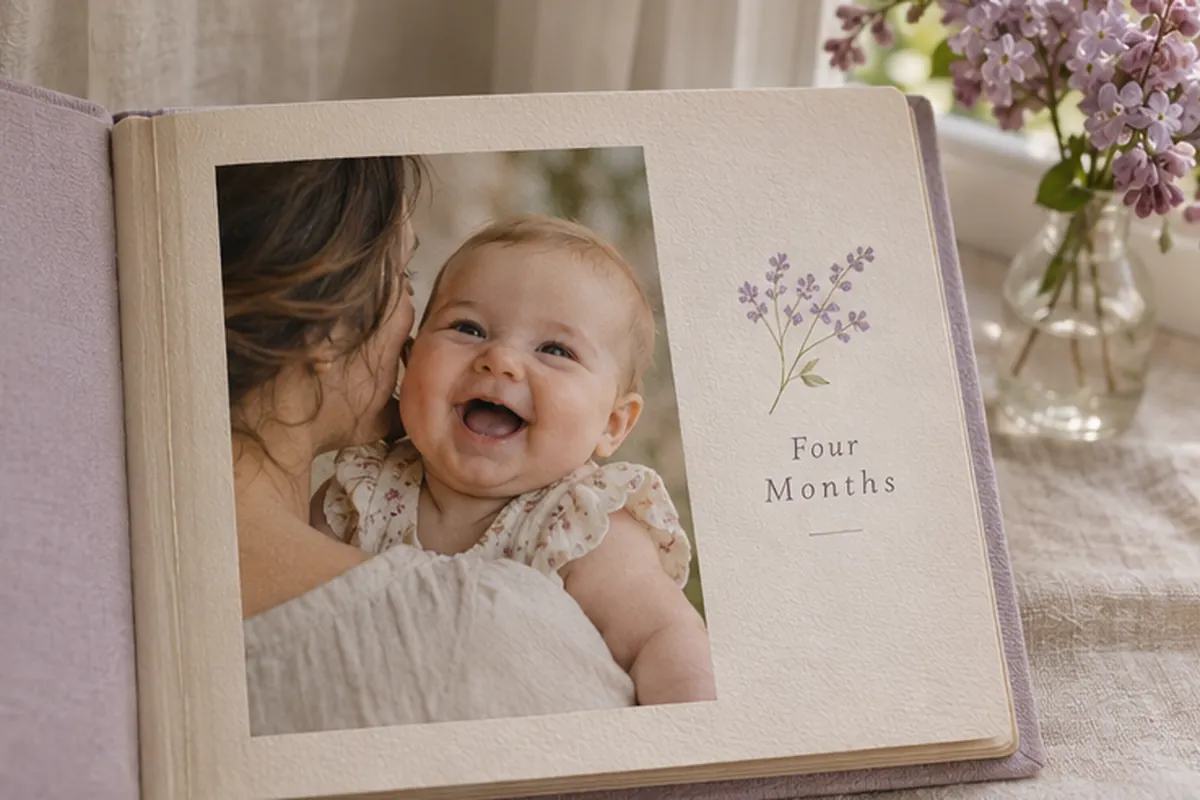
Leave room for a small note from the person who took the picture. Write what you were trying to do at the time or what made the moment unexpected. If you only have one photo, a plain mat and a line of ink can look just as complete as the strip.
6. Month five: an everyday routine
Choose a simple routine you might forget details of later, like sitting by the window at the same time each day or reading the same page of a book. Describe where you were and one part of the ritual that made it yours. A meaningful page can use a photograph of the room or the book if you do not have one of the routine itself.
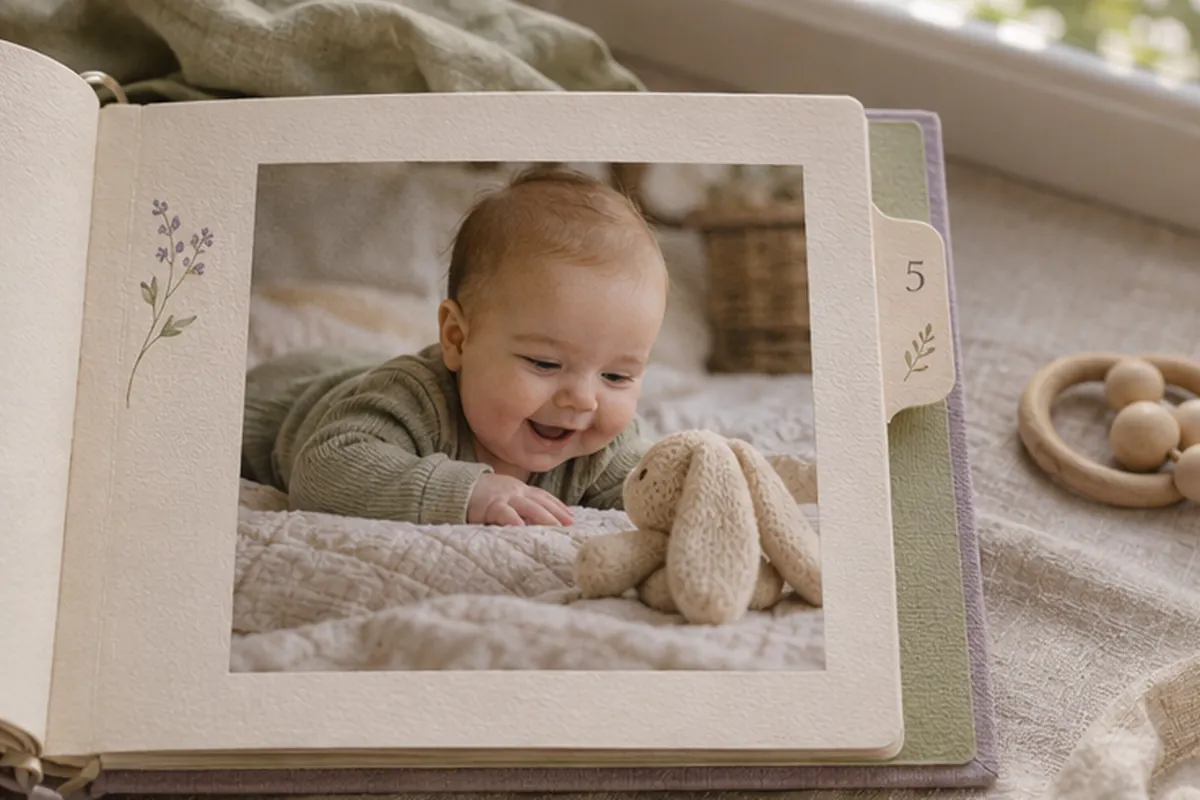
Try a title made of a phrase somebody actually said. Make the first and last lines easy to read by keeping the journaling card off busy patterned paper. A narrow date tab is enough decoration. Compare this entry with the notes from month one if you want to record how the house began to feel different.
7. Month six: a halfway portrait
Use a favorite photo from around the middle of the year and a second picture of the family if there is room. Write a small list of current favorites such as a song, a person who always got a big smile, or a toy in regular use. Record what made each favorite recognizable to you. Short phrases work well when the photo takes most of the page.
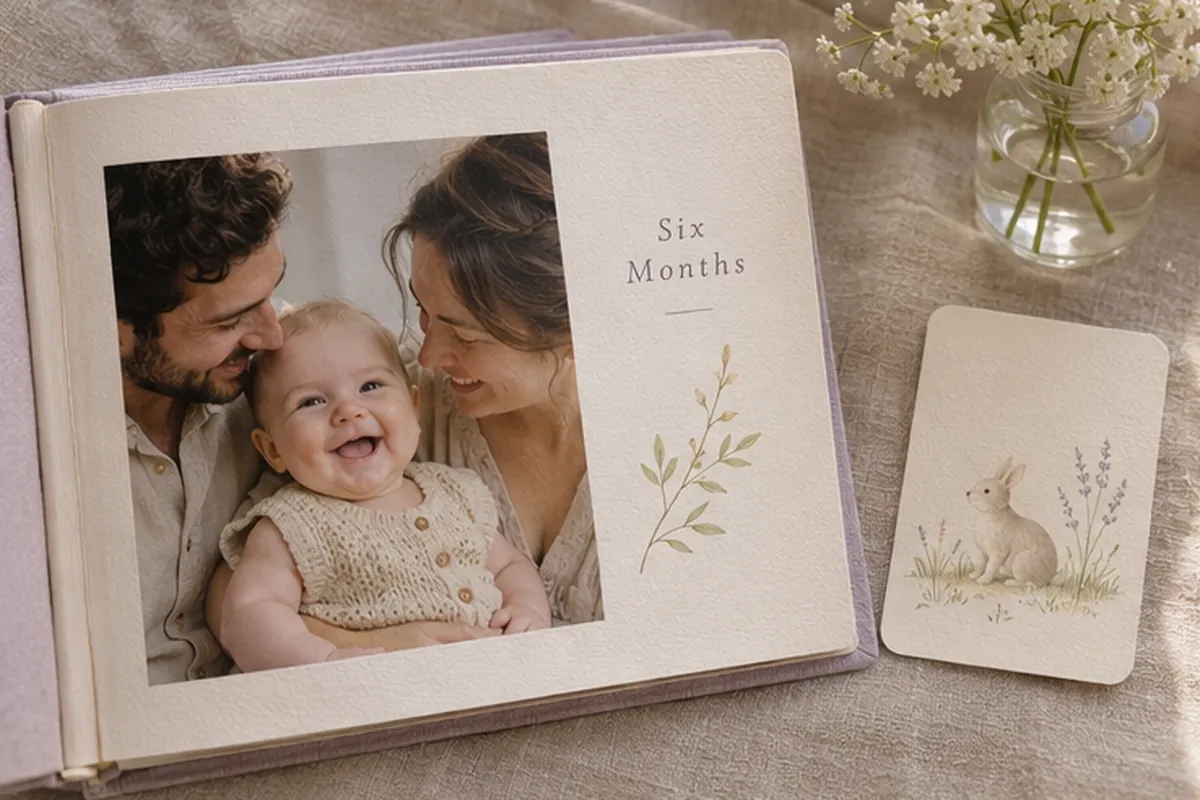
Draw a little box around one detail you especially want to revisit at the end of the book. You could ask another caregiver to choose their favorite memory from the first six months. Avoid making the page depend on a scripted half-birthday photo. A casual picture from the right week works fine.
8. Month seven: a day out together
Choose one outing, even if it was a regular walk. One image can show where you went and another can show what the day felt like: sunshine through trees, a bus window, or a blanket spread on the grass. Write the part of the outing you still tell people about. A sentence might be as simple as “we took a longer route because the park smelled like rain.”
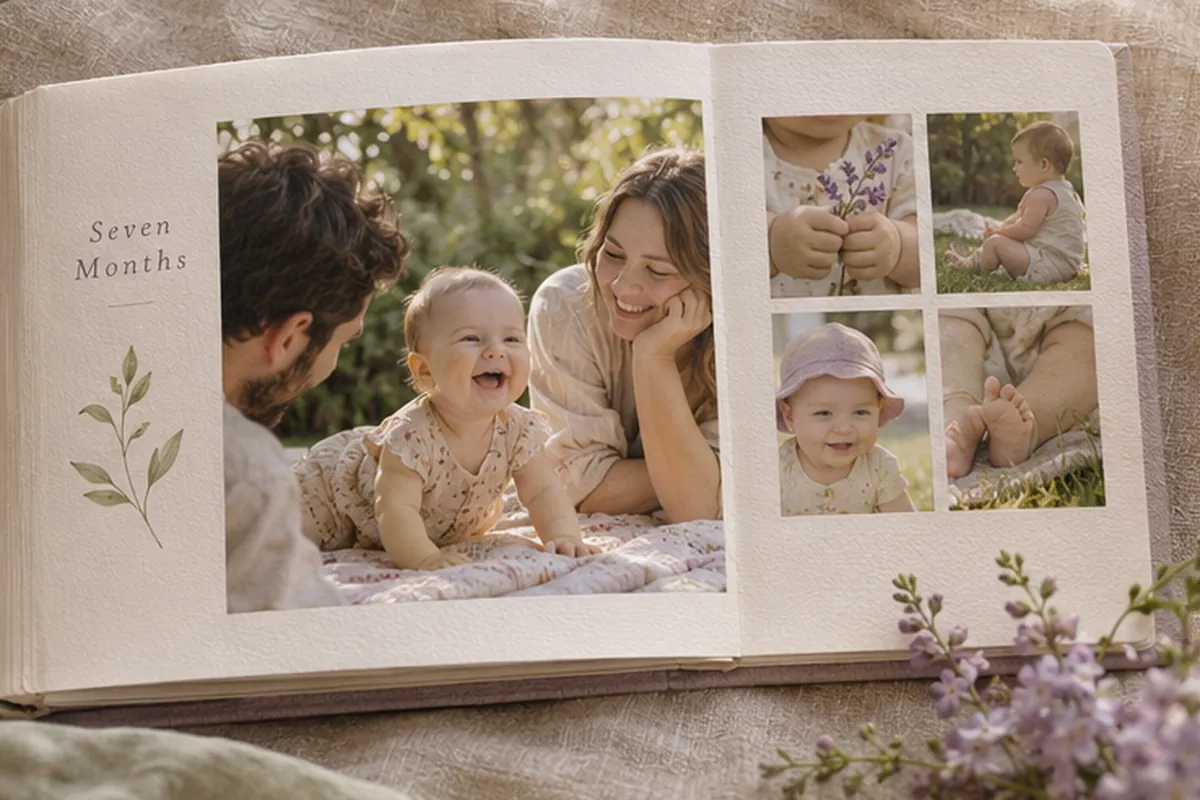
Use a narrow paper strip to connect the photographs, or keep the description on a small card between them. Place the date or place under the first picture. If there’s no outing photo this month, record how it felt to spend a quieter day at home and use a picture you already have.
9. Month eight: a favorite ordinary moment
Try a two-photo layout: one image of the setting and one of something you noticed. You could save a picture of a family meal and a close-up of the plate you used every day. Note the little detail with a few words about why it matters. Photographs of places and objects can carry the page when you do not feel like sorting dozens of nearly identical portraits.
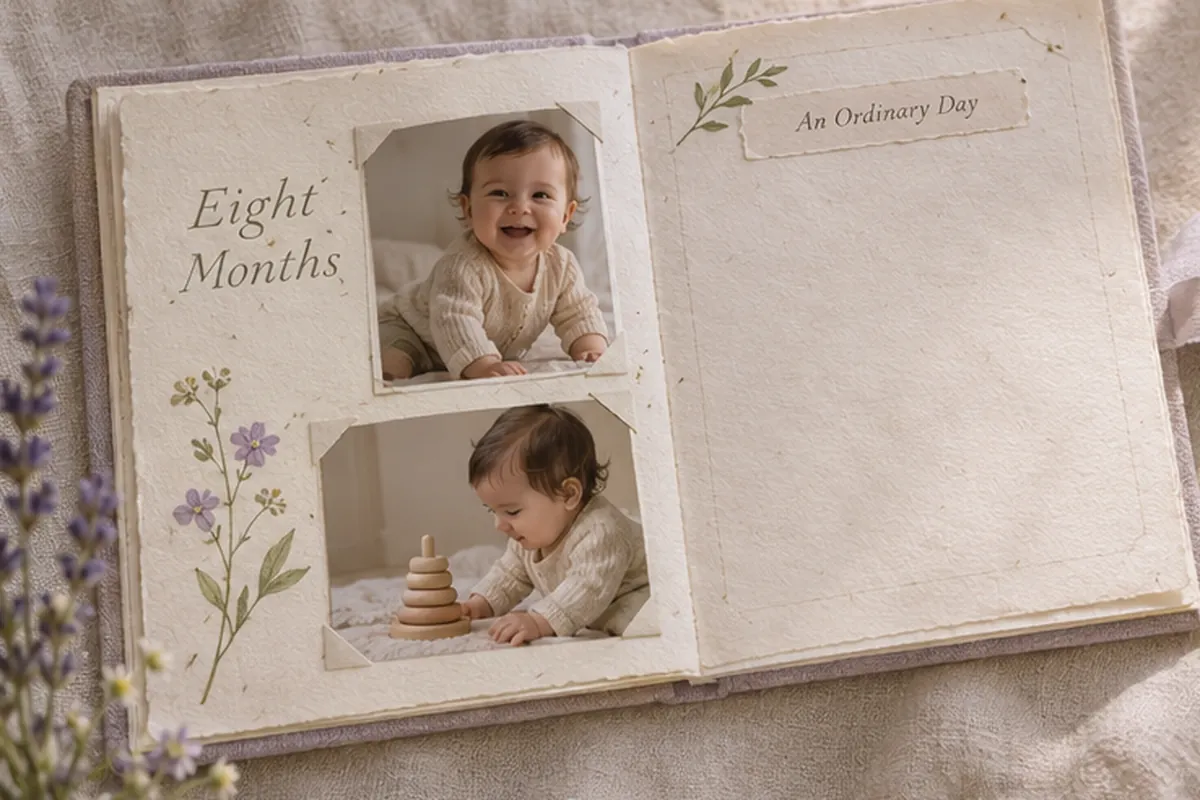
If you want short bits of text, set them in a simple column and leave enough room for handwriting. A little list of “things we saw this month” can sit beneath the photos. Refer to these 12×12 scrapbook layout ideas if you’re planning a larger album with room for several views.
10. Month nine: a well-loved book or object
Pair one snapshot with a word or phrase you heard often. A favorite fabric book, song, or small toy provides an easy subject. Record who introduced the item or where you usually reached for it. If you still have it, take a square-on photo while its details are easy to recognize and place a crop next to the main picture.
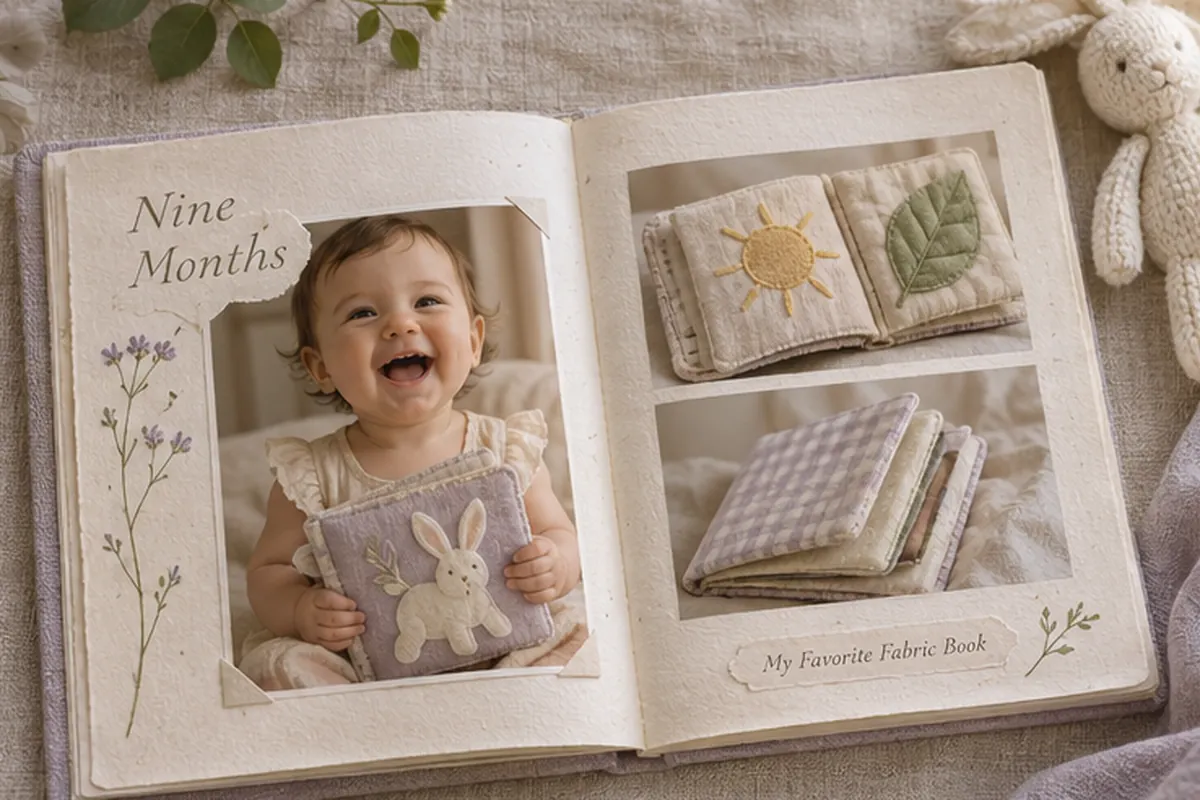
An object with texture can be photographed in side light to show how it looked. For a scrapbook page, a print is easier to turn than a knotted ribbon or thick toy label. Add a simple note if you plan to keep the original in a separate family box. That will help you match it to the album later.
11. Month ten: the familiar places
Make a page about two or three familiar settings, such as the doorway where you said goodbye each morning, a favorite view from the kitchen, or a relative’s chair. Keep room for a candid photo and a line of context. You can show a wider image of the room alongside a close-up that gives the entry a personal point of view.
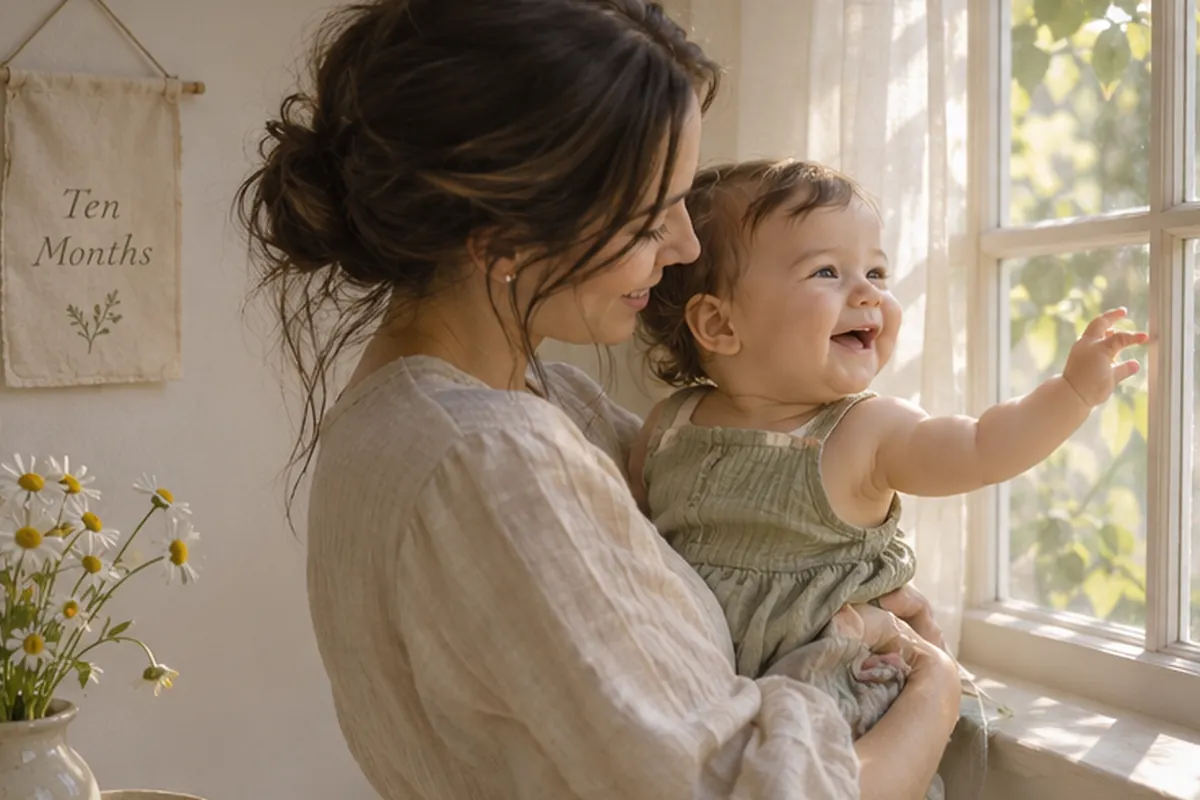
A simple label can locate the picture without putting any street addresses or contact details on the page. If you want a way to tie the items together, use a repeated image border or one pen color for all the captions. Leave some of the original margins if old prints look cramped when cropped.
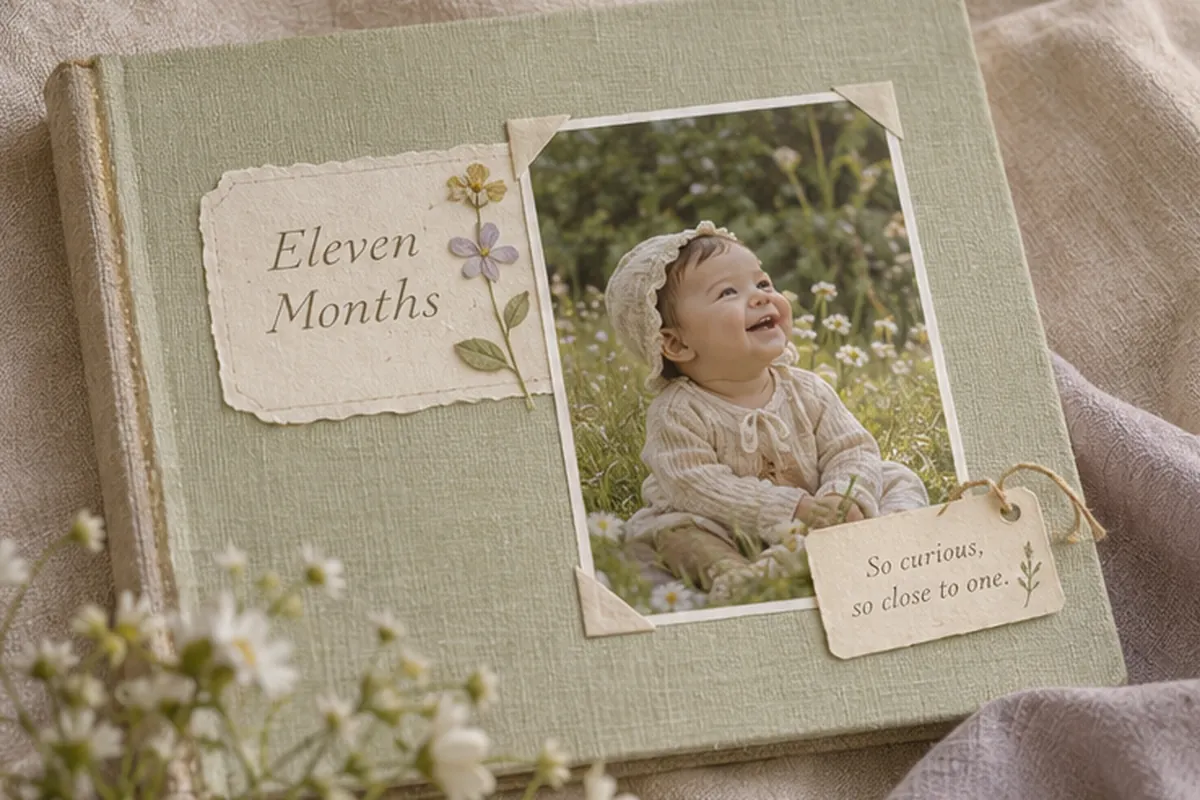
12. Month eleven: a sound, word, or gesture
Write down a sound or little gesture that makes you think of this month. Give it a caption and write a short account of one time it happened. A word or expression from an adult in the family belongs here too. The page can hold a sound you remember whether or not you have a matching video or photograph.
If you keep a private digital clip, add the saved file name and date to the back of the page so you can find it later. A handwritten line often remains more useful than a QR code that could stop working or point to a link you no longer want shared. Keep a local copy of anything you want to open years from now.
13. Month twelve: what life looks like now
Take a photo in one of the same places you photographed at the start of the year. Put a short note beneath it about a change in your own routine or in the family’s days. Your angle and lighting can be similar, though the picture can also simply show the same sofa, blanket, or book in use again. Tie the two pages together with a strip of matching paper or a similar caption.
Leave space for a few extra dates if this month coincides with a celebration or a trip. You can make the twelve-month page a simple report of ordinary life and give the birthday its own spread. When time is short, choose one image from the last month and write the entry later.
14. A first birthday page
Use one picture from the first birthday and record who was there, where it happened, or what made you remember it. A photo of the day works just as well if there was no gathering. If a friend brings a written wish, place a copy on a small mount or add the original to a pocket. You might use the facing page for a short letter about the first year.
Use two to four pictures if you have a lot to choose from. One wide shot and a couple of details give the eyes somewhere to rest. Browse the birthday magazine page ideas for more ideas about putting messages and party pictures together.
15. A slim keepsake pocket and letter
Make a pocket from cardstock, closing its sides and bottom and leaving a thumb notch or an opening at the top. Use it for a copy of a note, a paper announcement, or a small letter to open later. Avoid storing thick objects in the bound book since they can keep it from closing. Take photographs or scans of paper items you want to preserve there so the originals have a separate home.
Try making the letter only a page long. Write what surprised you about the year, which everyday details you will remember, or what you hope the child will know about the people who were there. Add the date, sign the letter, and leave room for a second caregiver to contribute if they would like to.
Finish the book in three short sessions
First, gather the photos and put the files in monthly folders. Pick one for each page before looking at decorations. Second, write captions on loose paper or in a draft on your phone. Leave room for a few longer memories, but remember that album space is easier to estimate once all the short entries are ready. Third, attach the photographs and add the captions. The same cardstock and pen can carry all twelve months. If someone else wants to help, ask them to pick one image or supply one sentence at a time so you can keep making progress.
Frequently asked questions
How do I catch up if I’m months behind?
Choose one photo per month and copy its date into the album. Add one true sentence and mark uncertain dates with a month or season rather than an exact day. Ask a family member to fill in a detail if it matters to you. Put your energy into a few stories you remember clearly and let quieter months use a plain caption.
What if some months have no photos?
Use a photocopy of a note, a photo of an ordinary object from the time, a drawing of the setting, or a sentence in your handwriting. The page can record what you remember even when there is no perfect matching image.
Where should I keep original keepsakes?
Keep paper flat and separate pieces that could mark or catch on each other. A labeled storage box makes sense for thicker objects. Put its label on a small card in the book and use a copy of any card, tag, or document you want to show on a page.