Birthday Magazine Page Ideas: 20 Creative Spreads to Include
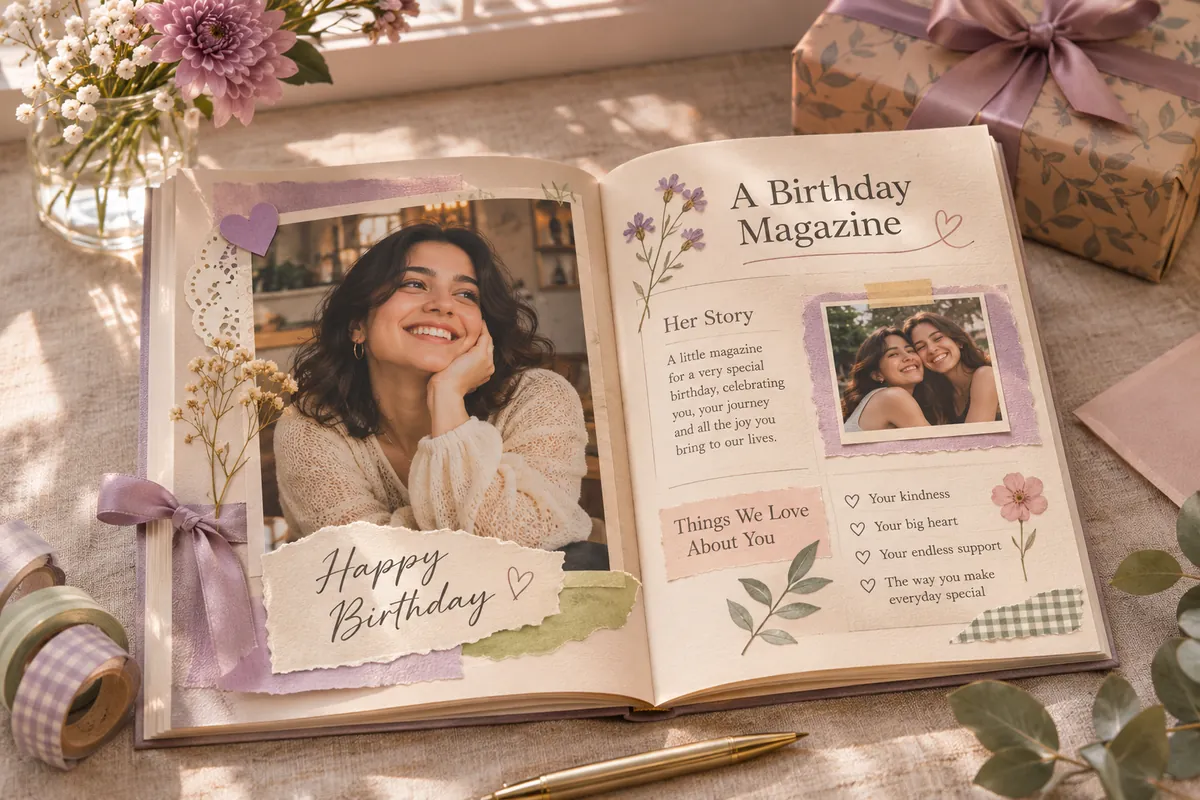
The best birthday magazine pages give the reader something different to discover on each turn. Open with a short letter or a striking photograph, follow with a mix of stories and visual pages, and save a personal note for the end. A small magazine might have a cover, eight pages inside, and a back cover. The 20 birthday magazine page ideas below give you options for a handful of pages or a longer keepsake.
A spread is the pair of pages you see when the magazine is open. You can make any of these ideas as a single page if you have a small print budget or limited photos. Before designing, collect a few images at their original size, notes from people who want to participate, and the names or dates you want to get right. Use a folder with clear filenames so you can find each piece when arranging the pages.
20 birthday magazine page ideas
1. The editor’s letter
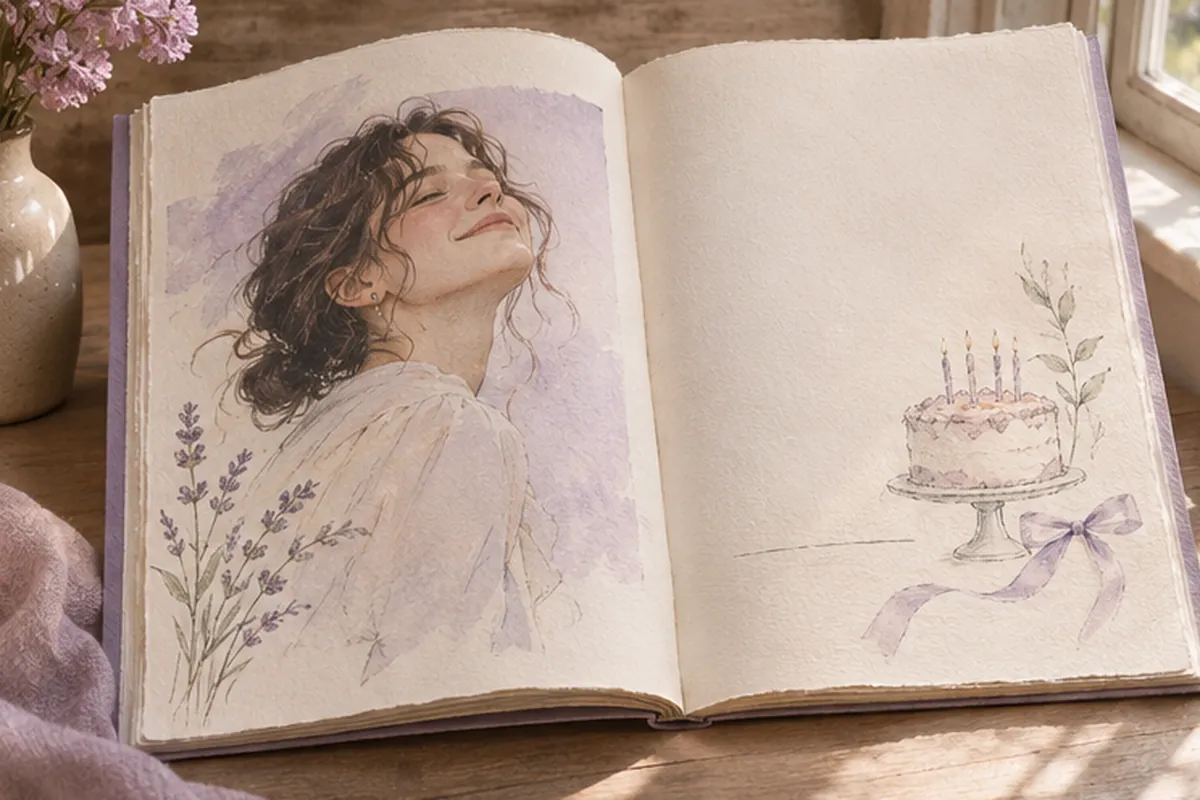
Open with 100 to 150 words from the person making the magazine. Start with one ordinary memory, such as the way the recipient always opens the window when friends arrive, and explain why you wanted to make this issue. Use a small image or a handwritten sign-off. Leave generous space at the top so the page feels like an invitation to keep reading.
2. A timeline of moments worth keeping
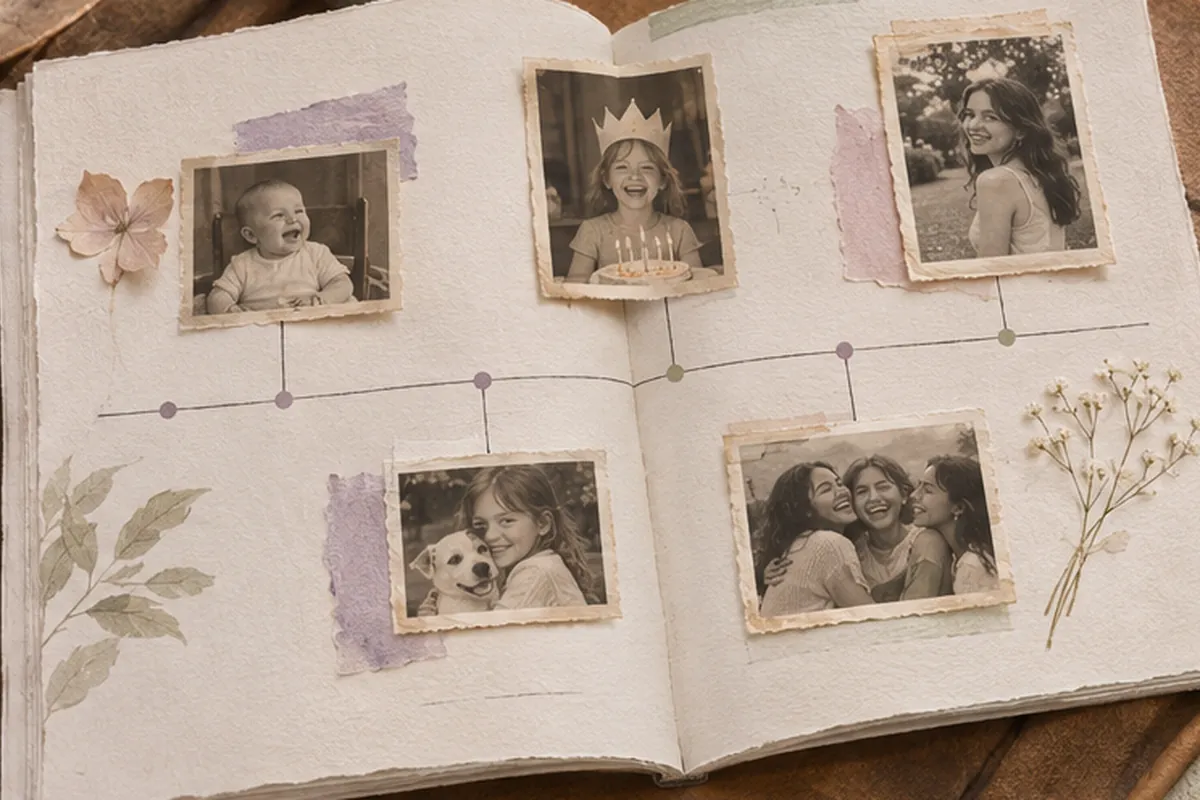
Choose five or six events and give each a date, a line of context, and a small photograph or illustration if available. Put major moments beside little things the recipient remembers fondly. One entry could be the year they moved, and the next could be the café where their new friends started meeting. Dates can be seasons or approximate years if that’s what you know. Keep headings short enough to read at a glance.
3. A portrait with favorite quotations
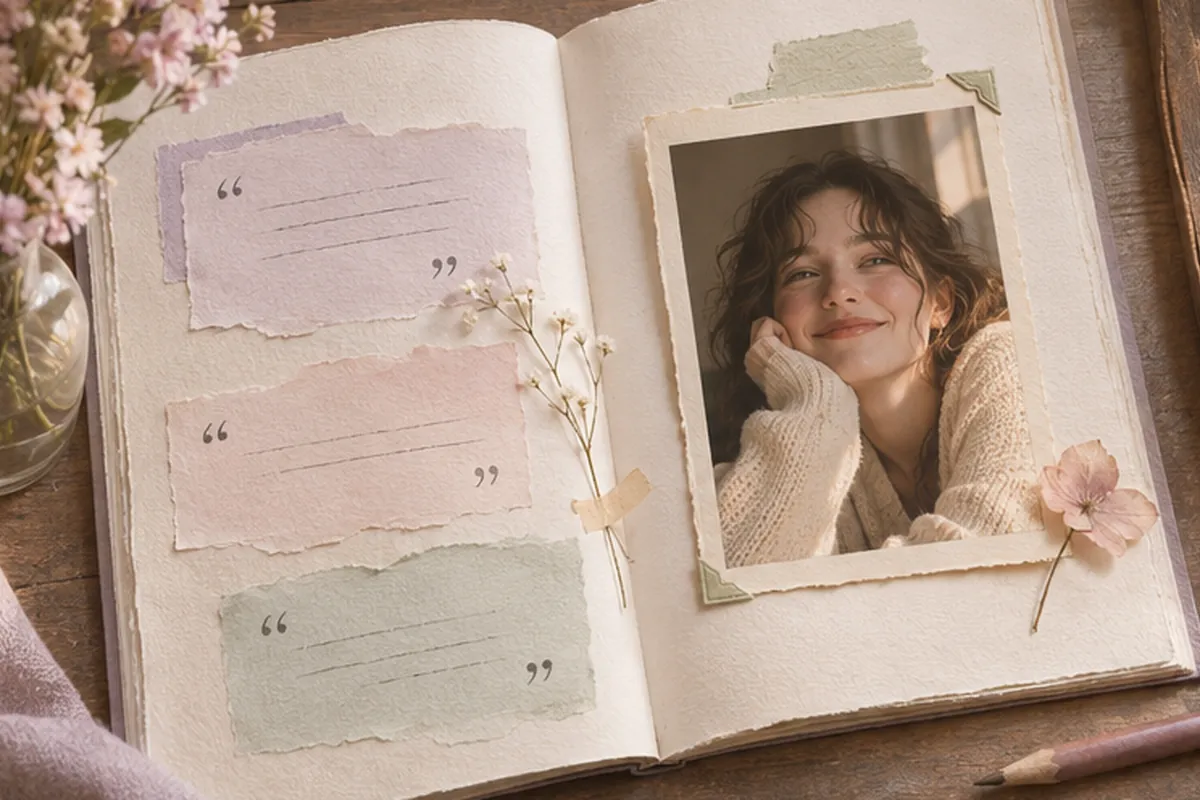
Choose one photo with enough space around the face and pair it with three lines from people who know the recipient. Give the quotes a theme, such as a phrase they say often or something they taught a friend. Ask each person how they would like their contribution attributed. A small type size difference between the quotes and names will make the page look more organized than using a different font for every contributor.
4. A photo essay from one day
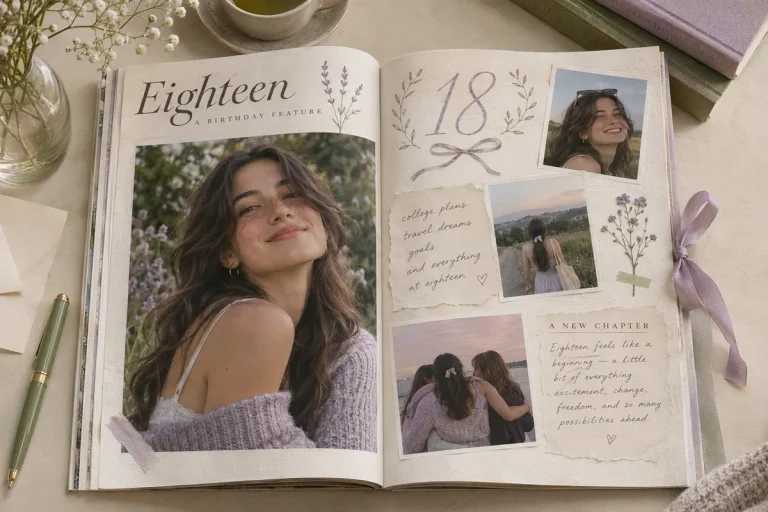
Choose a set of photos from one trip, birthday, or ordinary Sunday. Use one large frame for the strongest image and two or three small frames for details. Sequence them so the reader can follow what happened. For example, a market stall, a coffee cup, and a group photo can tell a short story about a day together. Add captions that name the place or mention something the photo could never show on its own.
5. A recipe with a story behind it
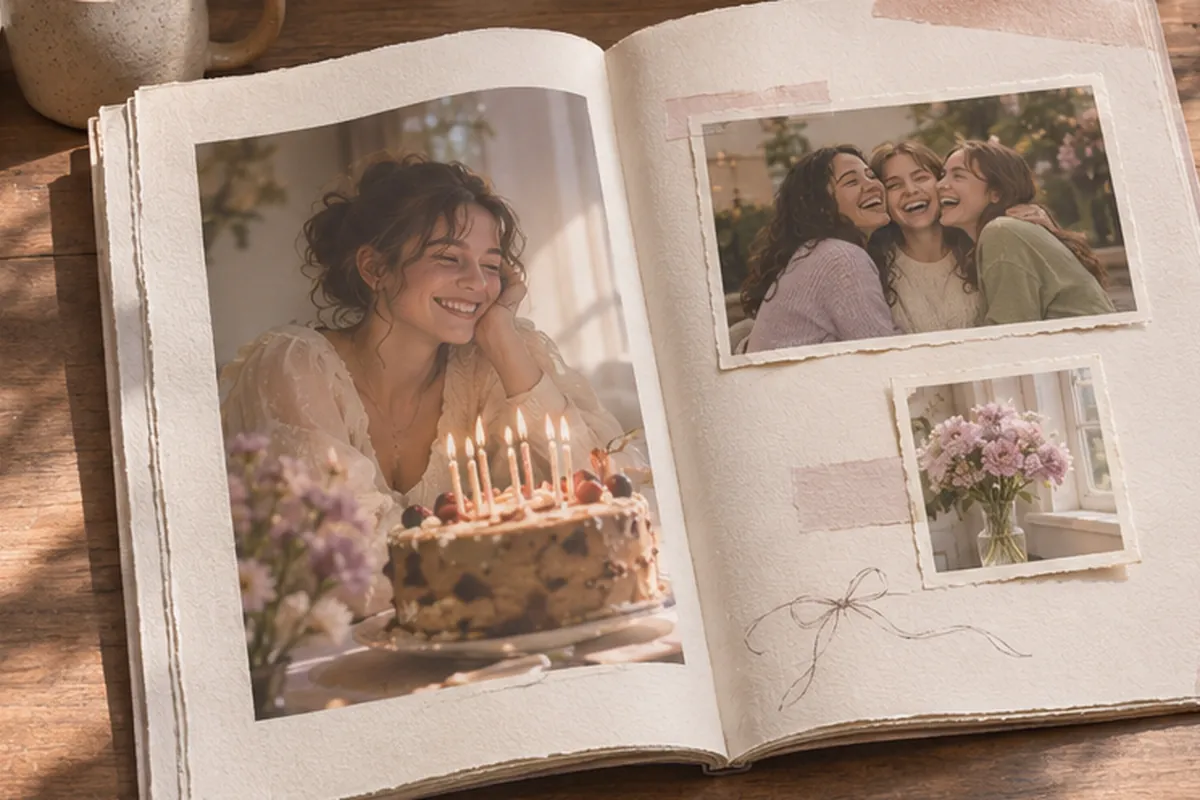
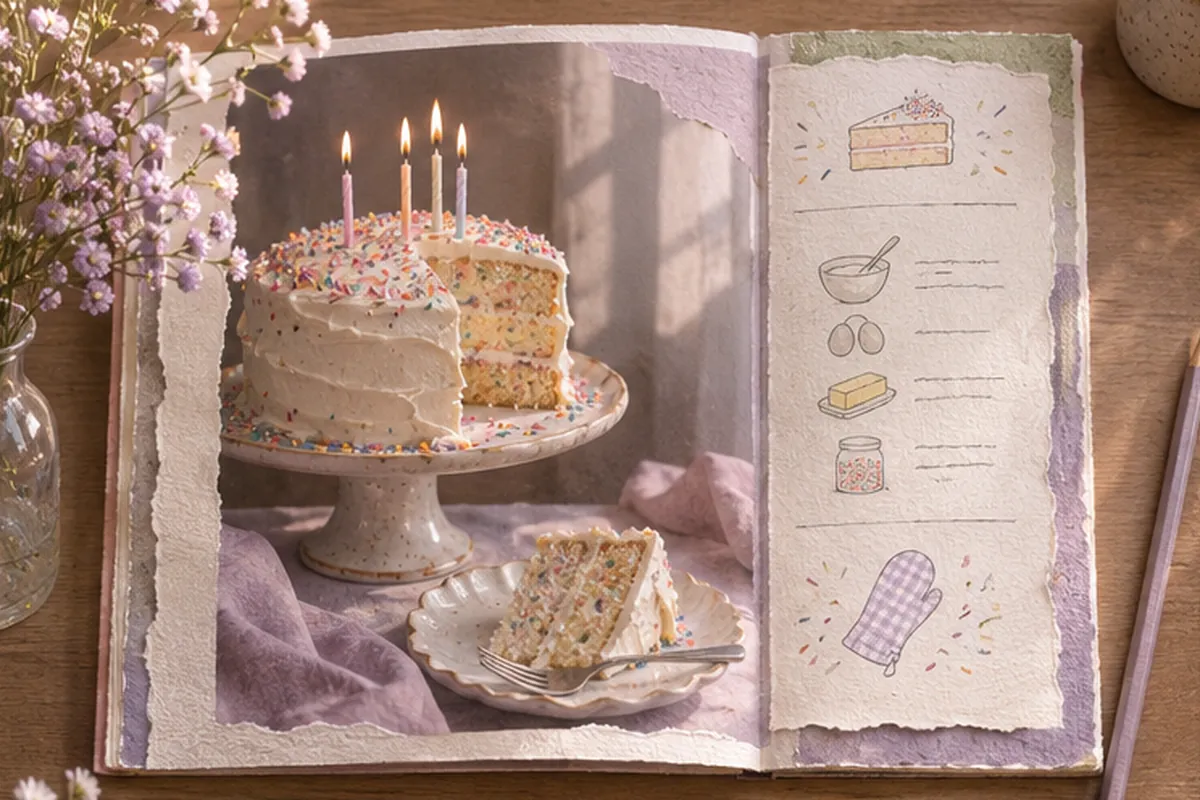
Ask for a signature recipe or write out the recipient’s favorite celebration snack. Put the ingredients and method in separate columns and add a short note about when it gets made. Use a photo of the actual dish if you have one or illustrate an ingredient. If the recipe came from a particular person, credit them in a small caption and check the amounts before you send the pages to print.
6. Places that tell their story
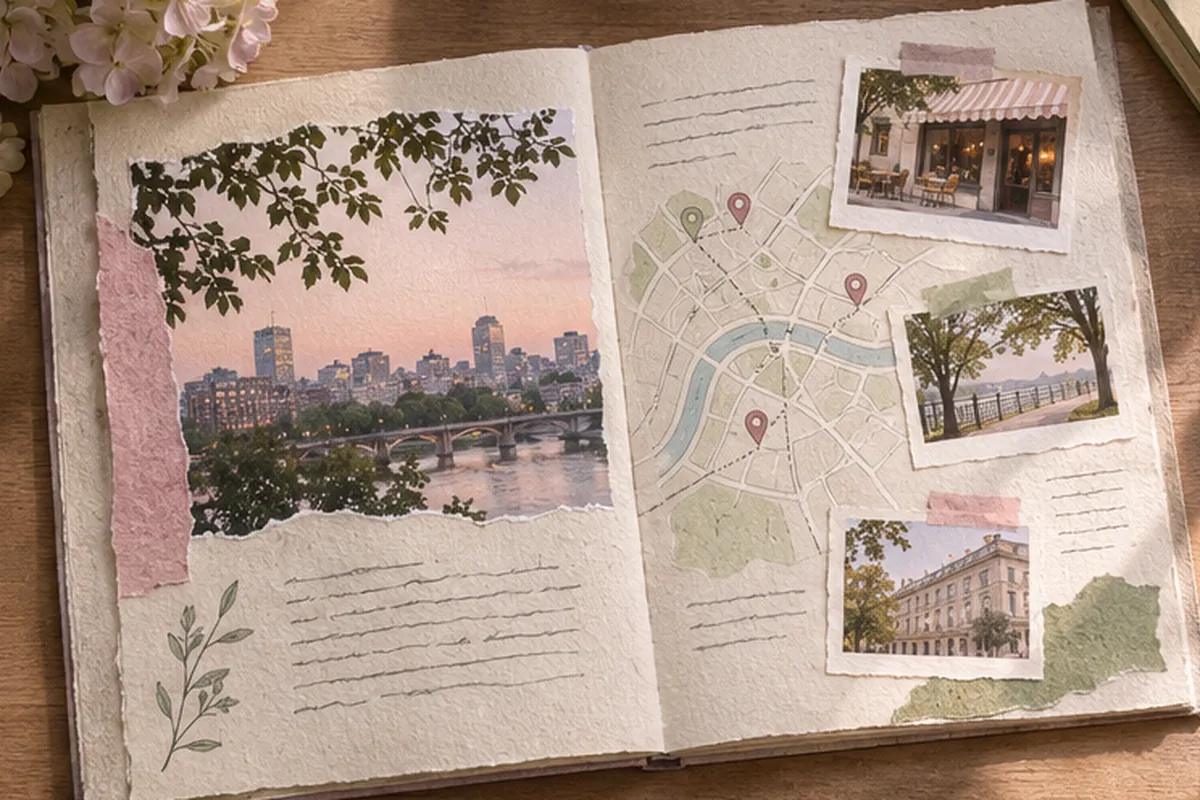
Make a simple map with a handful of points. A former apartment, movie theater, or familiar park can become a caption about a shared moment. A full map is optional. A sequence of little street sketches can tell the same story. General descriptions such as “first apartment” or “the corner bakery” give the spread enough context without including addresses the recipient would prefer to keep private.
7. Notes from friends and family
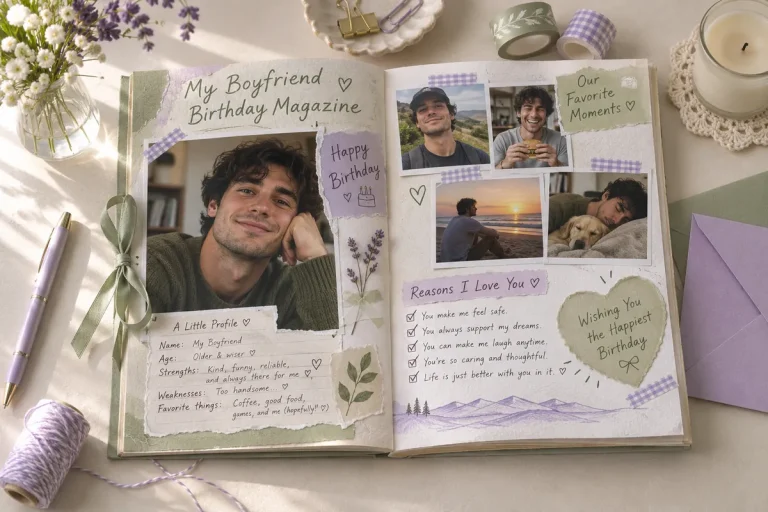
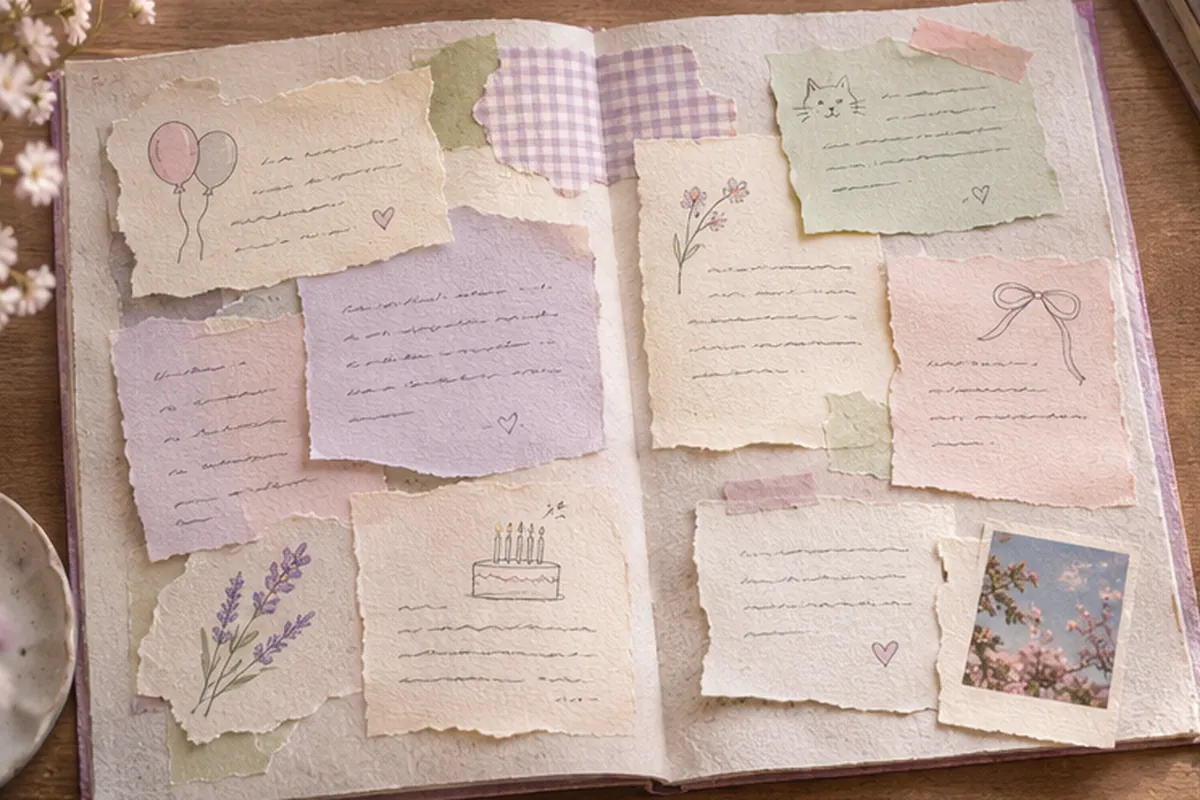
Send a prompt such as “Tell me about a time they surprised you” and give people a few days to answer. Ask for two or three sentences so several notes can sit on one spread. You can scan notes written by hand as long as the writing remains clear at print size. Repeat one visual element, such as a colored rule beside each name, to keep a mix of writing styles readable. Follow up about spelling or attribution before printing.
8. A playlist with memories attached
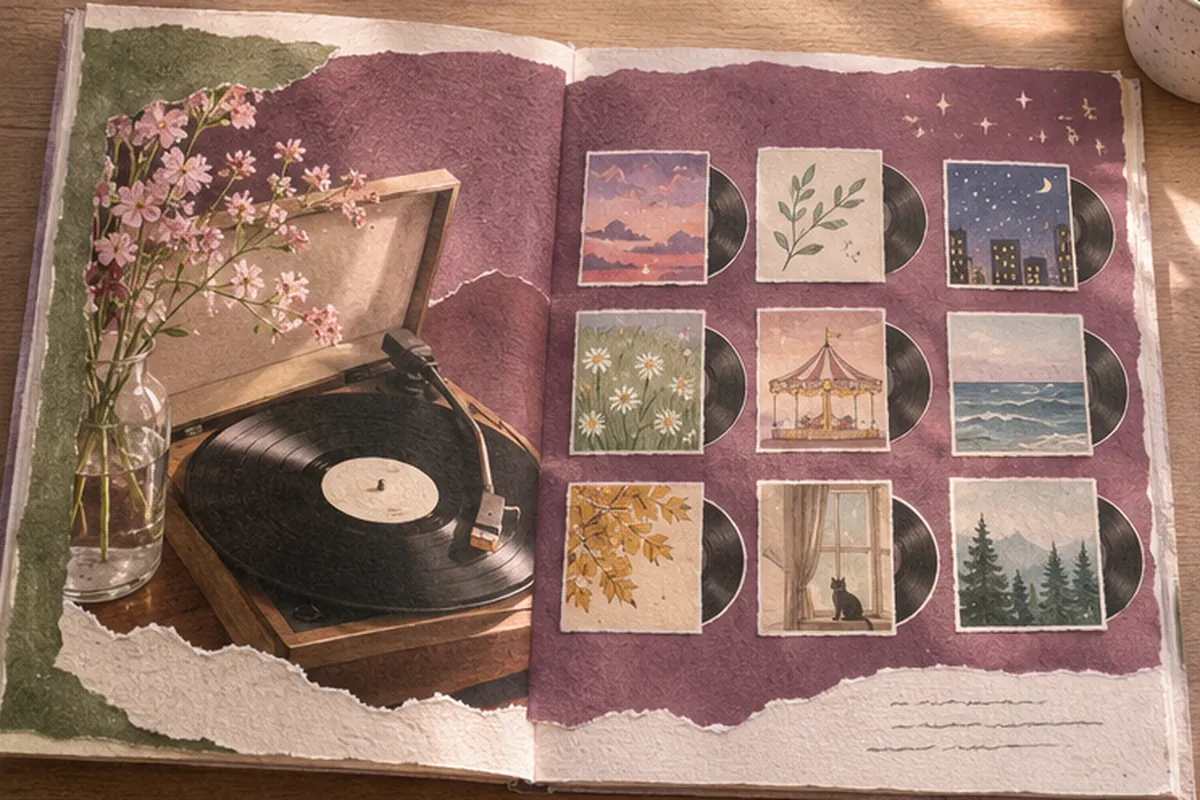
Pick six songs and list the title and performer. Give each a short note about why it belongs, such as a road trip, a dance floor, or the song the recipient used to play while making pancakes. Use small original illustrations in place of copied album art if you plan to share the magazine publicly. A link or QR code can go in the corner if the playlist is available online. Test it from a printed page before you bind the final copy.
9. A collection of favorite things
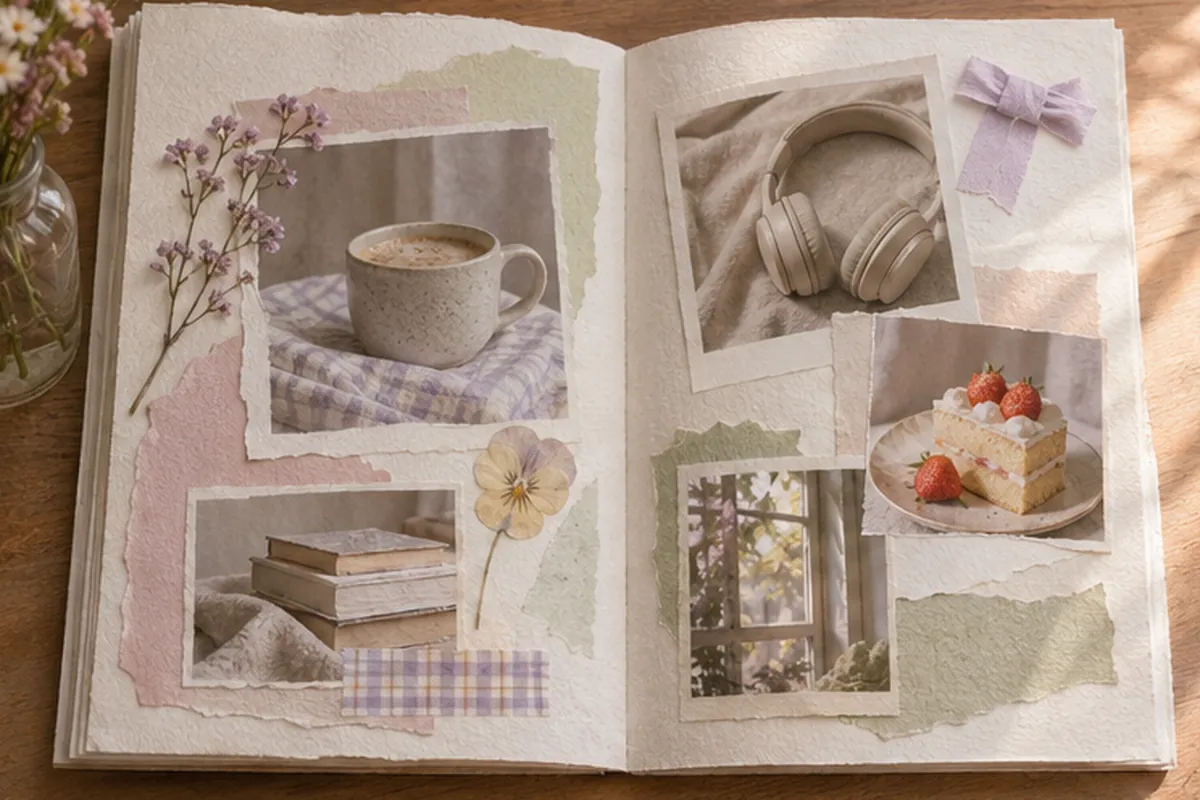
Give one page to a handful of small comforts: a certain pen, a pastry, a well-worn paperback, or a mug with a chip in the handle. Photograph the objects together or arrange small pictures in an editorial grid. Add a sentence about what makes each one recognizable to friends. The everyday details make this page feel personal even if you have few portraits to include and the layout can be completed with one afternoon’s worth of photos.
10. A short birthday quiz
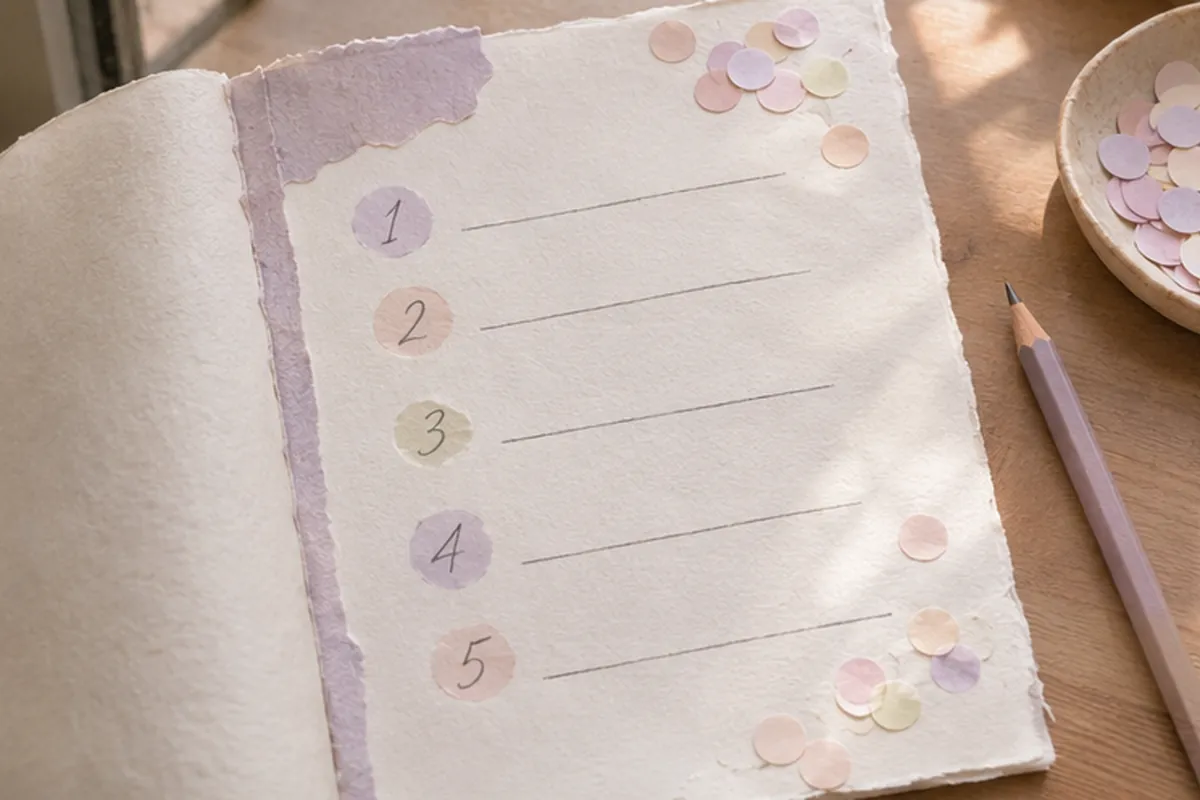
Write five questions people who know the recipient might be able to answer. Mix a favorite snack with a specific memory or a recurring joke that will still make sense when the magazine is opened years later. Include a printed answer key somewhere nearby. If you want people to write in the magazine, leave full-width answer lines and test a pen on the paper. Short multiple-choice answers work well when the magazine will stay unmarked.
11. An interview in the recipient’s own words
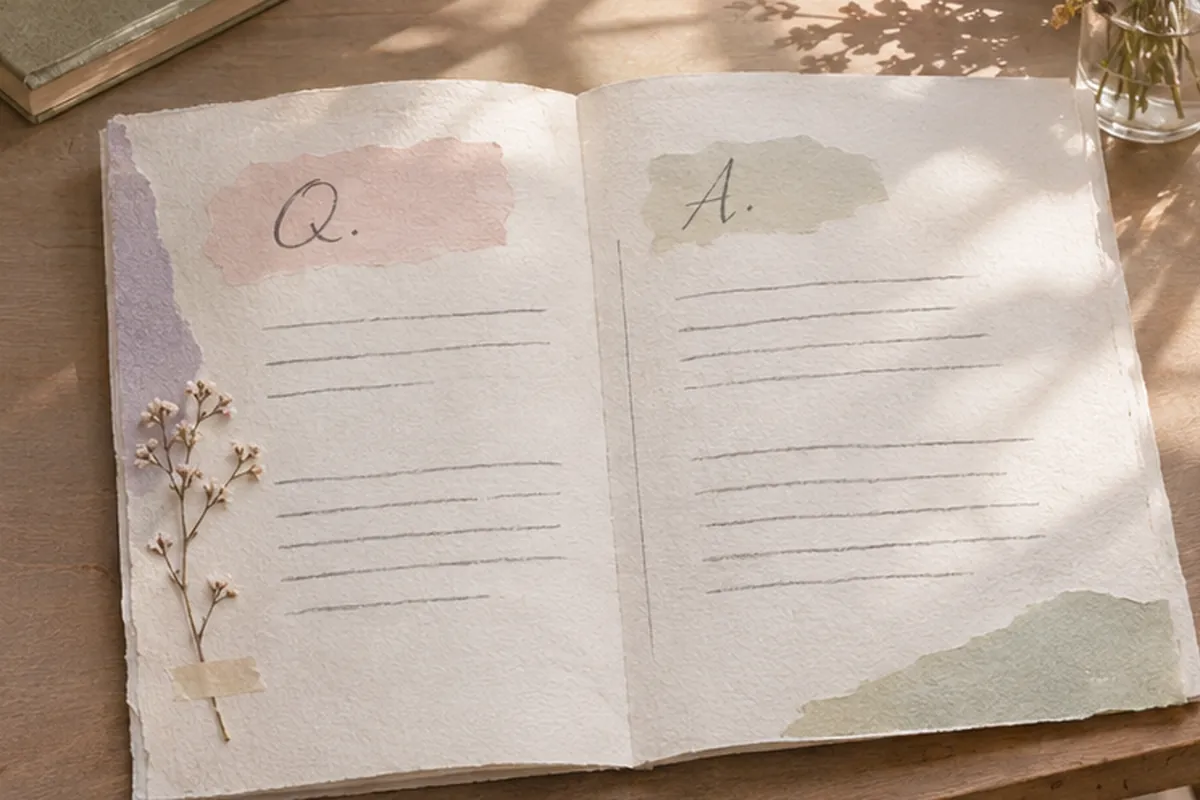
Ask five questions and keep the answers conversational. Try “What did you change your mind about this year?” or “What would you gladly do again tomorrow?” Keep a few of the recipient’s expressions so the interview sounds like them. If it’s a surprise gift, ask a willing sibling or friend to reflect on their own memories instead. Put the question in bold and give the answer enough room to read without squeezing.
12. A final note and room for signatures
Write a short closing note, then keep the lower half of the page open for handwriting. A birthday party copy can go around a room for signatures. For a private gift, write one note by hand after printing and leave space for the recipient to add the date. A strong last page returns to a detail from the opening letter, such as a familiar joke or a trip you’re hoping to take together.
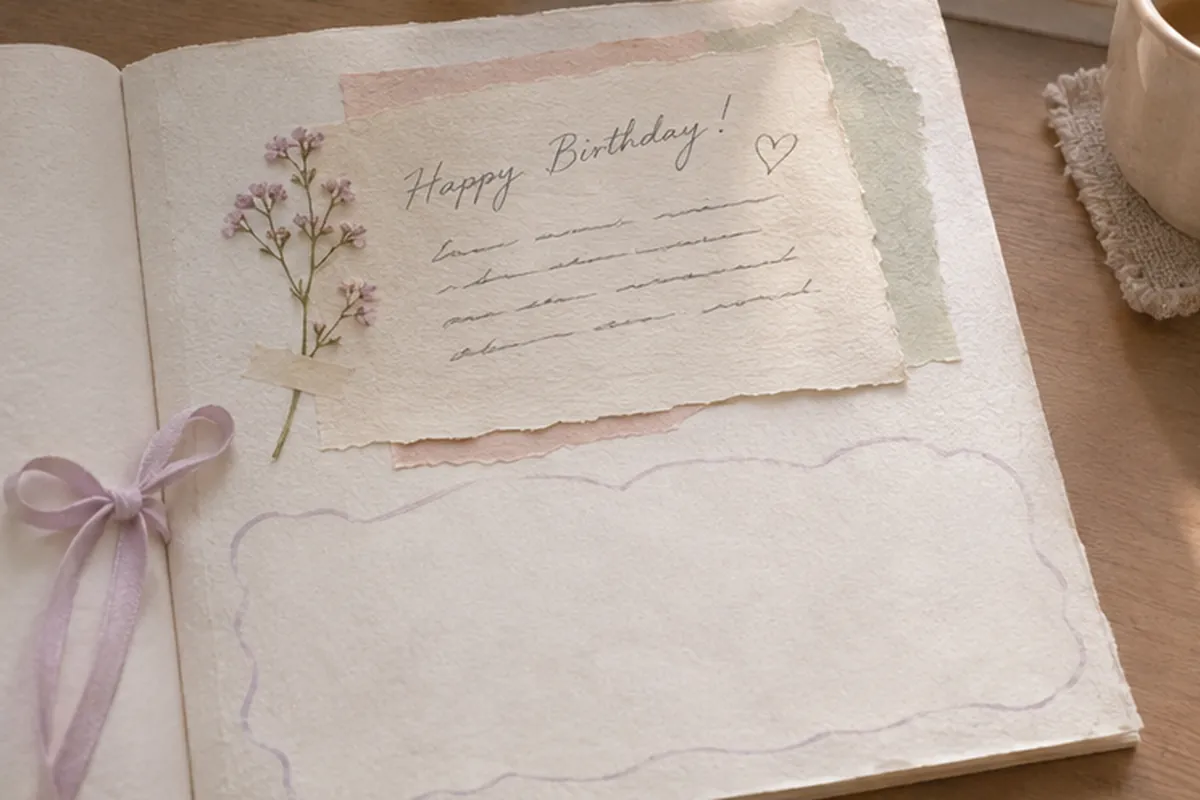
13. A then-and-now pairing
Set one old photo beside a newer one. Match an object, location, or pose if you can, and write a brief caption beneath each. When the source images differ in quality, use smaller same-sized frames and let the caption carry the connection. A scanned childhood picture at a kitchen table and a recent photo of the recipient cooking can make a better pair than two unrelated portraits taken at similar angles.
14. A miniature feature on a hobby
Treat a favorite pastime like the subject of a small magazine feature. Include a short story about how it started, one detail about what the recipient enjoys now, and a photograph of a specific tool or result. If the hobby is gardening, the spread might show saved seed envelopes and a picture of their first tomato harvest. Avoid assuming you know why the hobby matters. A friend’s memory or a line from the recipient can anchor the story.
15. A tiny awards page
Invent a few affectionate awards, such as “best picnic packing” or “quickest to find a used-book shop.” Under each one, add a sentence naming the moment that inspired it. Keep the jokes easy to understand and choose things the recipient enjoys being known for. A ribbon or hand-drawn border can be enough decoration. You can also ask friends to submit award titles in advance and give each one a small credit line.
16. A page of lessons and good advice
List three to five small things you picked up from the recipient. Make each one specific enough to stand on its own. “Order dessert when there’s something you can’t make at home” says more than “enjoy life.” Pair a lesson with a brief scene that shows how you learned it. This makes a good text-led page after several dense photo spreads, especially if the first line is set larger and the rest uses plain body text.
17. A day-in-the-life schedule
Pick an actual day you spent together or build an ideal day out of things the recipient loves. Set it out as a loose schedule, with times down one edge and a short scene beside each. Morning might be a bakery stop and afternoon could be a long walk. A series of small spot illustrations adds interest without requiring extra photos. If the page is an imagined itinerary, mark it as such in the heading.
18. A birthday time capsule
Record a handful of items the recipient might like to remember in later years. These could be the book on their bedside table, a dish they cook often, or a phrase the group always says. Add the month and year at the top and put one small caption under each item. Leave a space at the end for a new addition after the magazine is given, such as a photo from the birthday itself.
19. A prediction and wishes page
Ask a few friends to contribute one hope for the next year. Focus on modest, thoughtful things that give the recipient room to make their own plans. A nice format is one statement from each contributor written on a separate piece of paper. Photograph or scan the slips, then line them up with enough space around each to preserve the handwriting. Leave an empty spot for a wish the recipient can write on the day.
20. A back cover with a final photograph
Give the back cover its own image and a short line of text. It could show a house from a trip you took together, a favorite object that appears inside the issue, or a photo from a celebration. Add a small issue date and the names of anyone who wants to be credited for contributing. Keep the cover text away from the edge where it could be cut off during trimming. A useful finishing touch is a small dedication on the inside back cover.
Build a short magazine out of the strongest ideas
For a 12-page saddle-stitched booklet counting the covers, use page 1 for the front cover and page 2 for the editor’s letter. Put the timeline or portrait on page 3. Give facing pages 4 and 5 to a photo essay, then put the recipe and favorites page on pages 6 and 7. Use pages 8 and 9 for notes from friends and family. Page 10 can hold a short quiz and page 11 can hold the answers and a handwritten closing note. Use page 12 as the back cover. Make a folded paper dummy before you lay out the whole issue. Number it in pencil with the book closed, then open it normally to check which pages face each other.
For a longer version, alternate a photo-heavy spread with a quieter written feature. Give every page its own job. If two pages tell the same story, combine them and use the empty space for something distinctive. Start with the birthday magazine tutorial when you’re ready to assemble the booklet, then use the birthday magazine cover ideas to plan the front. If your project is centered on shared milestones rather than a birthday, you can adapt these anniversary memory book ideas for the keepsake pages.
Choose two page layouts you can repeat
For an easy starting point, create one layout with a full-width photo above a caption and another with a short heading above two columns. Use the photo layout for places or favorites and the text layout for the interview or letters. A small recurring detail, such as the same color above each page number, helps the issue feel related. Save the large decorative type for the title and a handful of headings so the stories remain readable.
Set a consistent inside margin before dropping in photos. It can be a little wider than the outside margin, especially if words sit near folds or staples. Give quotes a readable size and try one page as a test print at the final dimensions. Older photos with soft focus often print more successfully in a small frame with generous margins.
Check the pages before sending them to print
Put the pages in reader order and export a proof PDF. Check the printer’s instructions for page size, margins, and whether they need a bleed area. If a shop is imposing a booklet, send individual pages in the order they’re read unless the shop tells you otherwise. If you’re printing a folded booklet at home, use your printer or PDF viewer’s booklet setting and test a few pages on ordinary paper. Saddle-stitched booklets use page counts in multiples of four because every folded sheet adds four pages.
Make one proof copy and look at it in ordinary light. Small captions and pale writing are often harder to read in print than on a screen. Check the binding margin, straighten tilted scans, and look for faces that might be hidden in the gutter. Read every date and name out loud. Before making more copies or putting any page online, make sure the people pictured are comfortable with the planned audience.
For a magazine you plan to make together at a party, print the pages first and bring small note cards so people can write at the same time. Choose one person to gather and check the cards. Put the final notes in a pocket on a dedicated page, or attach flat ones with paper tape after the party. For a magazine you are mailing, use a piece of clean card behind the cover to keep the corners flat and leave loose extras in a separate envelope.
Frequently asked questions
What should go on the first inside page?
Use a personal letter or a portrait with a few sentences about why you made the magazine. A table of contents can fit under the letter if there are enough pages to need one. For a short booklet, opening straight into a good story is usually easier to follow.
What if I only have a few good photos?
Use the strongest photograph once at a generous size. Fill other pages with a short interview, a favorite recipe, a note from a friend, a map sketch, and handwritten memories. Full-size scans of notes can add visual interest when small photos would look blurry.
How many ideas should I include in one birthday magazine?
Start with six to eight recurring features for a small printed issue and add more only when each brings a new detail. For a longer magazine, sketch the page order before designing and look for a mix of photographs, stories, and short pages. A clear opening and a thoughtful last page make a booklet feel complete at any length.