Mood Tracker Printable Ideas: 12 Creative Journal Charts and Layouts
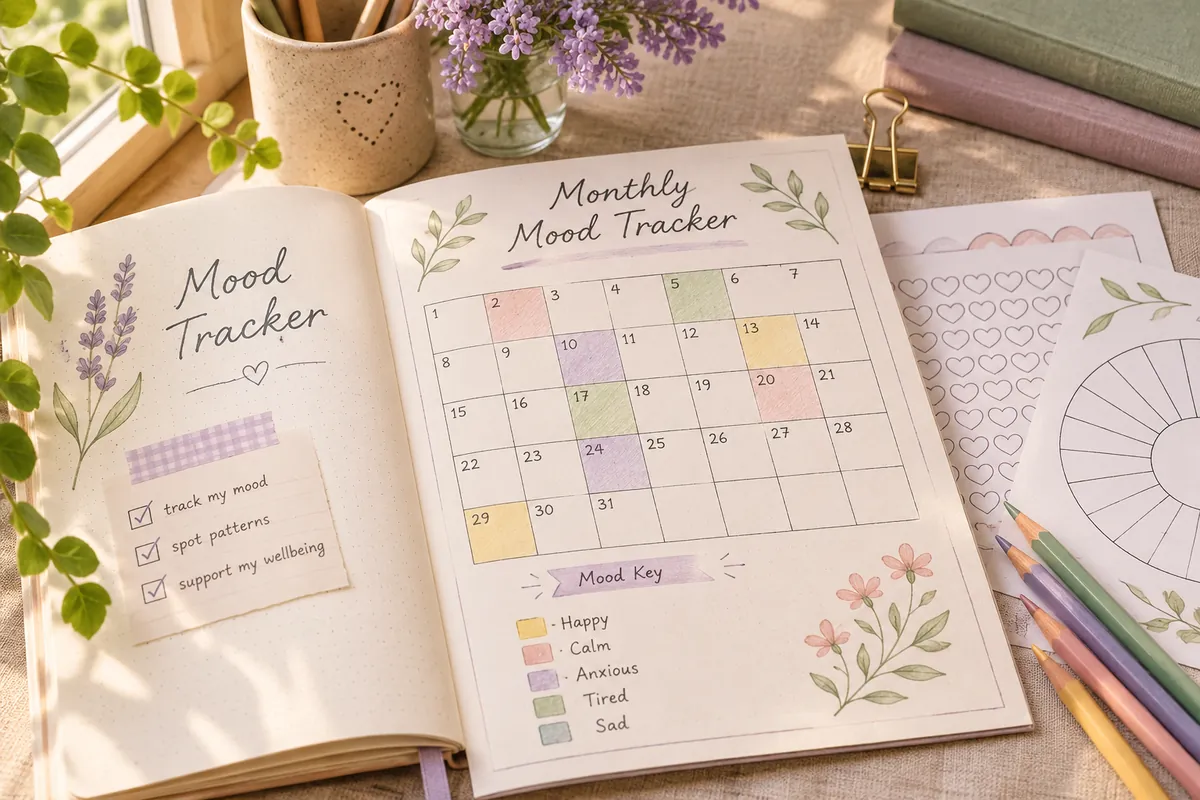
A printable mood tracker can be as simple as one marked square or a word beside the date. Start with a chart you can fill in quickly, then decide whether there is room for an optional note. The printable pack below has three layouts: a 31-day monthly grid, a one-week check-in, and a two-week morning-and-evening sheet. Each comes with a blank key. The other layouts in this guide can be drawn on a notebook page or adapted from the pack.
Download the free mood tracker printables
Download mood trackers (US Letter PDF) · Download mood trackers (A4 PDF)
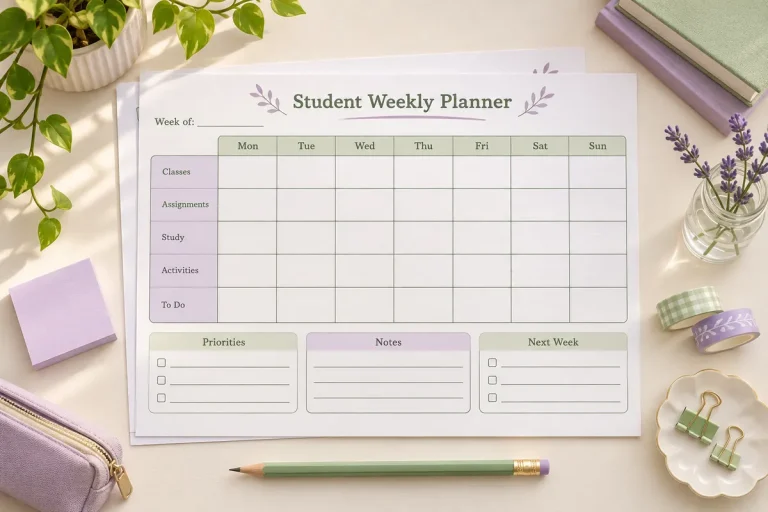
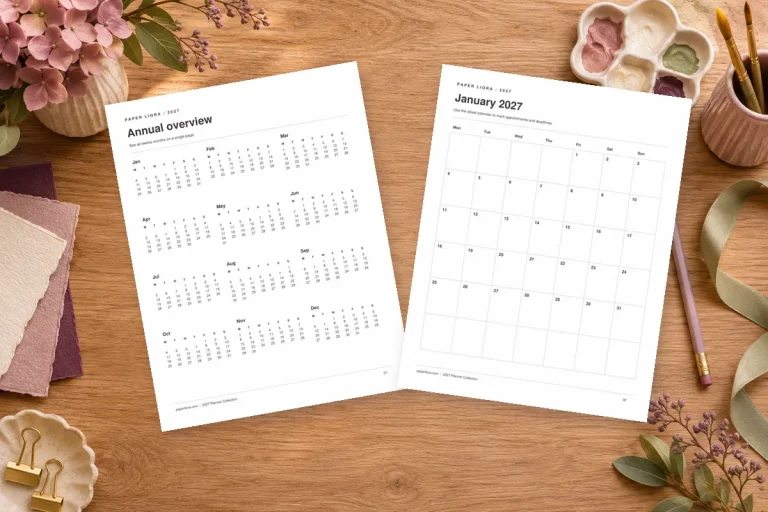
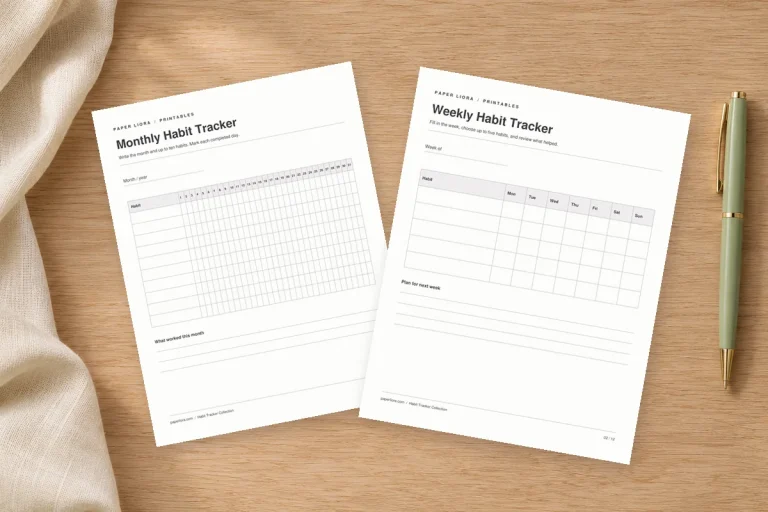
Pick the PDF that matches your paper. Each file has three pages, and you can select just the one you need in the print dialog. The monthly grid takes one mark a day, the weekly page gives you space for one line of context, and the morning-and-evening sheet has two small boxes per day. The printed designs are black and white so you can choose your own colors or symbols. The photos throughout the guide show ideas for adapting and decorating the layouts.
Preview the page and print at actual size on standard paper. If the preview clips an edge on your printer, use its Fit option. When trimming a sheet for a smaller journal, print one test first and check that there is room for names, dates, and punches. There is no need to print the entire pack in color. You can keep a full-size page behind a journal cover or fold it in half to store it loose.
Choose a key you’ll remember
Use words that describe your experience plainly. A sample key could be calm, upbeat, low, tense, and mixed. Write the words beside the swatches or marks rather than relying on memory. You can use colored pencils, draw shapes, or choose both so you can still distinguish entries in a black-and-white copy. Leave a day blank if you didn’t record it, and explain any special mark you use for days that felt hard to summarize.
A tracker is a personal journaling page. Some people like a single word while others prefer to write about something that happened. It is fine to record just a few days or set the page aside when it is no longer useful. Choose a place to keep it where you are comfortable with who can see it. A binder behind a cover page, a folded sheet, or a notebook with a pocket can all keep it out of casual view.
12 printable mood tracker charts and journal layouts
1. Monthly grid with one box per day
Use the first page of the download. Label the top with the month and year, then put a dot, pattern, or swatch in the box for each date you record. If a month has fewer than 31 days, put a light diagonal through the unused boxes before you start. Add dates to the small notes area if you expect to reread the entries later.
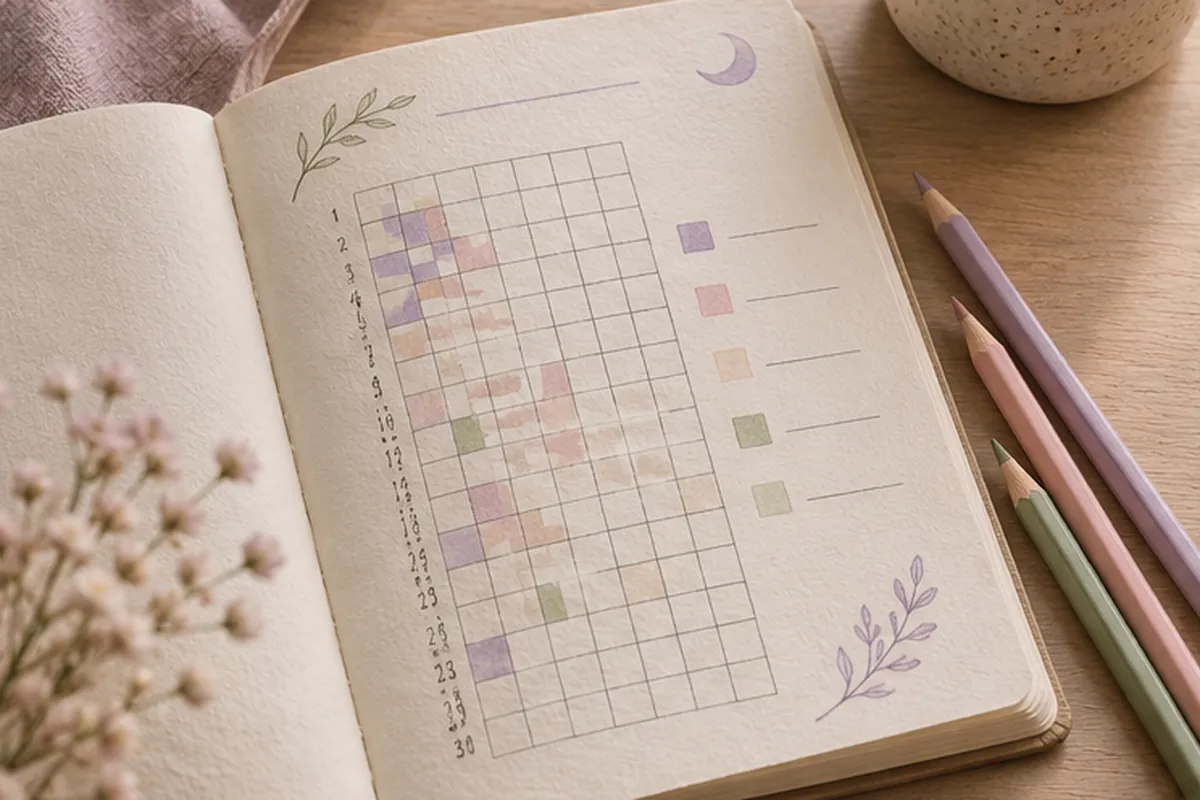
Decide if each mark will stand for how you felt at the time you checked in or for how you’d describe the whole day. Either convention works. Pick one for the month to keep the page easy to reread. If you want to show more than one feeling, divide an occasional box diagonally and put a different pattern on each side.
2. One-line daily check-in
Draw or print a table with space for the date, a short feeling word, and a small note. Reserve a slim space for the date so the words can breathe. Put the table where it is easy to reach and choose a pen you already use. Consider “quiet,” “restless,” or “relieved” as starting words if your first key feels too broad.
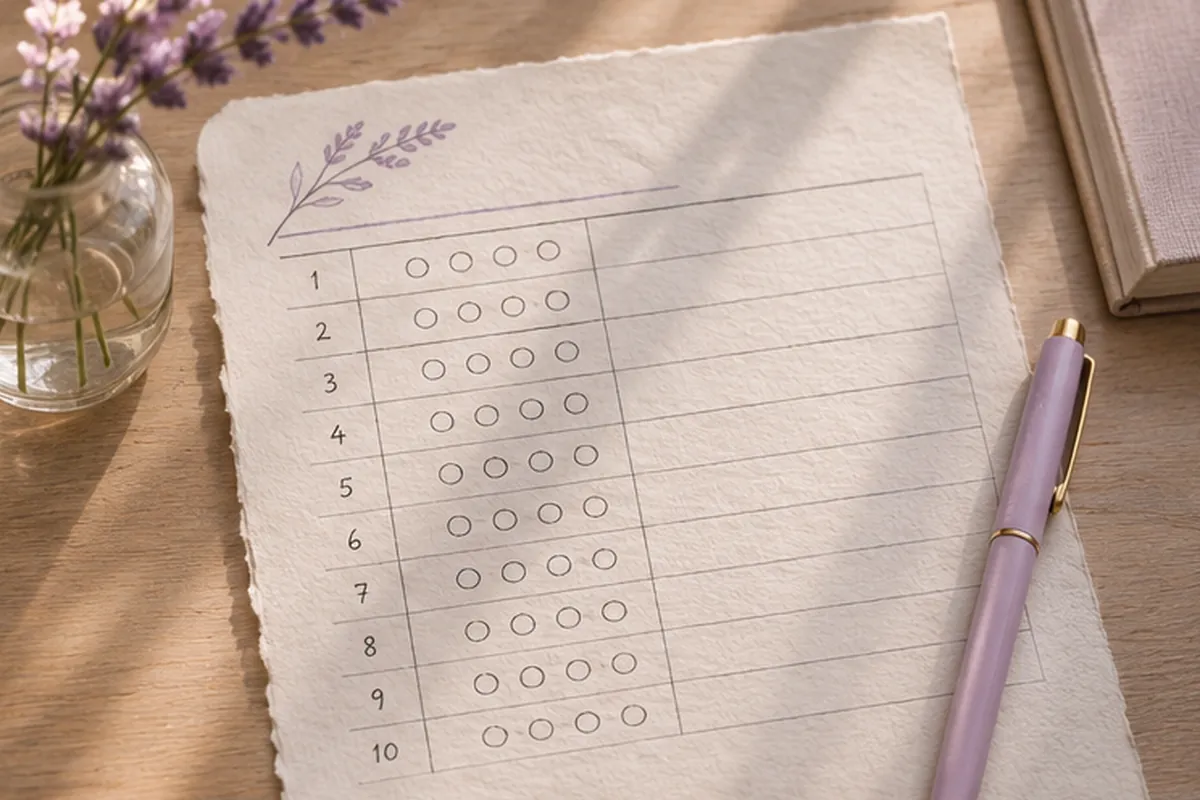
Context can be something concrete such as “left the house earlier,” “called my sister,” or “late train.” One short note is usually plenty. Leave out the note on busy days and avoid trying to reconstruct multiple days later from memory. An unfilled row shows that there is no entry for that day.
3. Morning and evening columns
Use the third printable if evenings tend to feel different from mornings. Choose roughly when to make each mark. Morning might mean after breakfast and evening might mean just before shutting your notebook. If your schedule changes, call them “start” and “end” instead. Use the same key in both columns so an identical mark has an identical meaning.
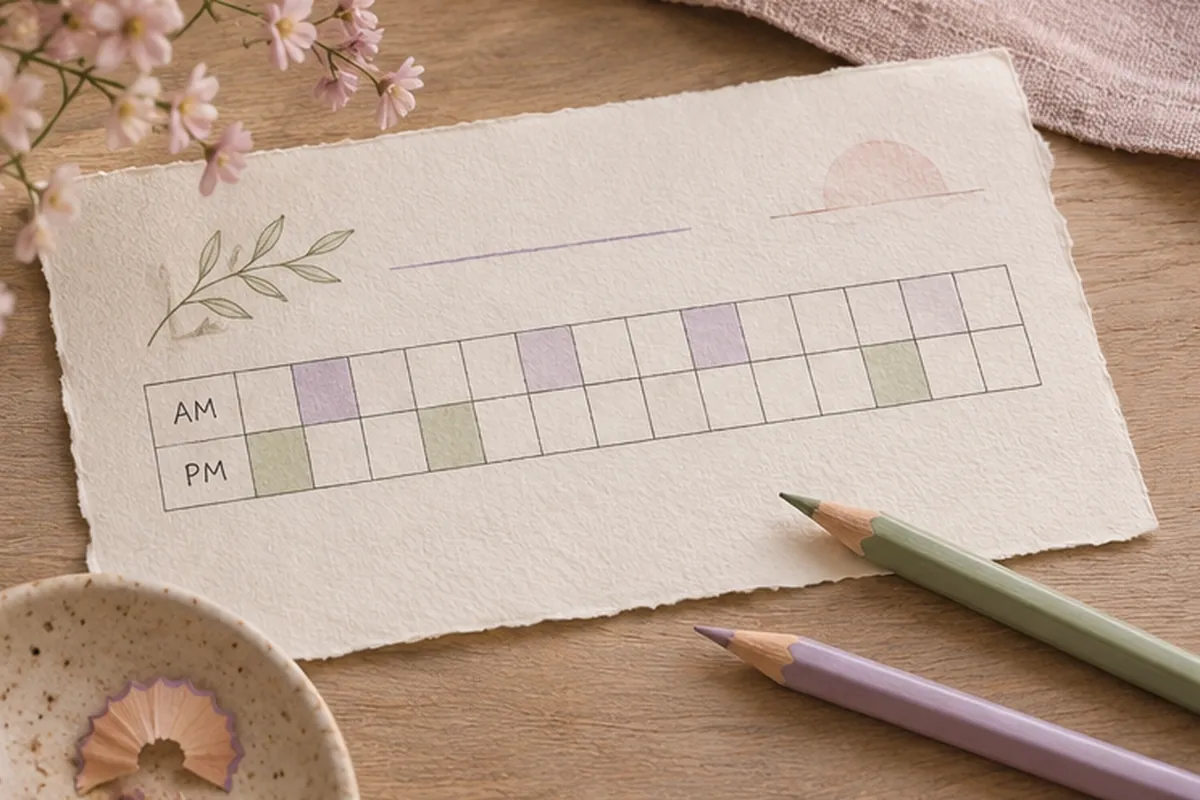
The two small boxes give you a way to see moments that would be hidden in a single daily mark. Keep the optional comment narrow if all you want is a word or two. A blank evening slot can stay blank when you check in only in the morning. You can also cover the note column with a strip of scrap paper to use it as a short list for the next day.
4. Year in pixels
Draw or print a matrix with one column per month and dates down the side. Cross out impossible dates and include February 29 only in a leap year. Keep the column headings visible and try a sample row before committing to a whole year. A 31-row grid can get crowded, so leave large outer margins and avoid making every square too small to fill.
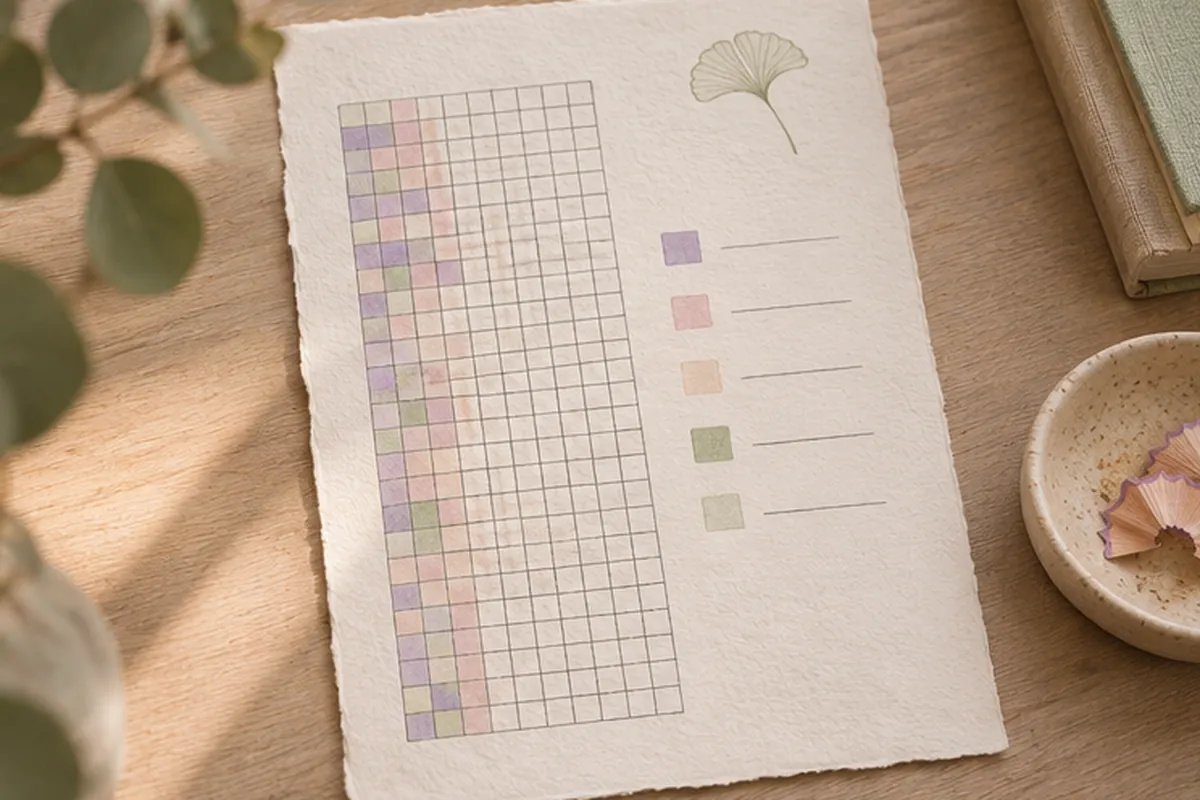
This layout works best when one symbol per day is enough. If you want to keep a record of details, put a tiny reference mark in the corner and write the note on a different page. Let blank cells remain easy to distinguish from codes for a mood. Add a brief note to the legend if your palette or key changes midyear.
5. One week on a narrow strip
Use the second page of the pack as a full-size weekly sheet or draw a compact version to tuck into a planner pocket. On the compact version, seven rows with a mark and one short line are enough. Put the date at the top and use Monday through Sunday, or start on the day you typically set up a new page.
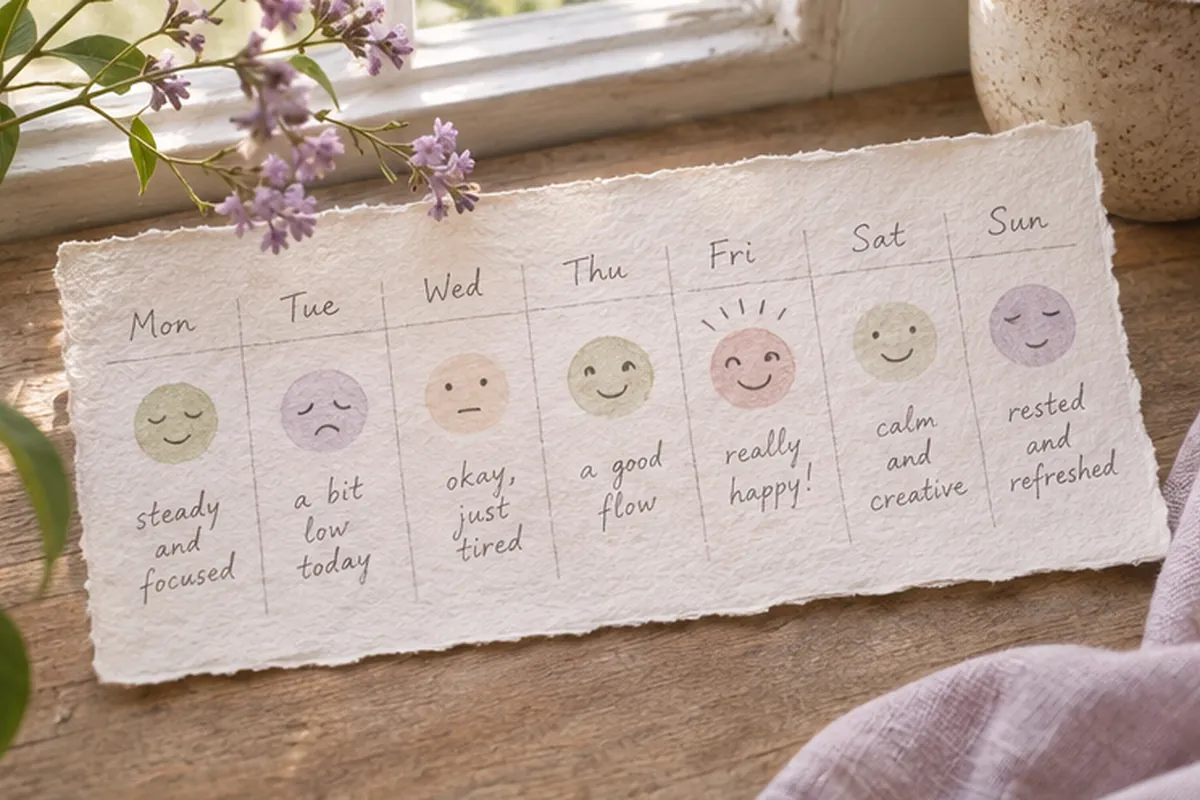
This is a good layout to try when you are unsure whether you want to track for a month. Test where you remember to keep the page and whether the writing space is comfortable. At the end of a week, decide if the notes, symbols, or routine felt worth keeping. A new weekly strip costs little to redraw if you want to move a column.
6. A mood wheel with wedges
Draw a circle and divide it into equal wedges using a ruler, or use a wheel design with space around the outside for labels. A seven-wedge circle is easier to mark than a full month of very narrow wedges. Label the date near the wide part of each section and leave the center open for a title or key. Keep one check-in per wedge if you want a fast visual record.
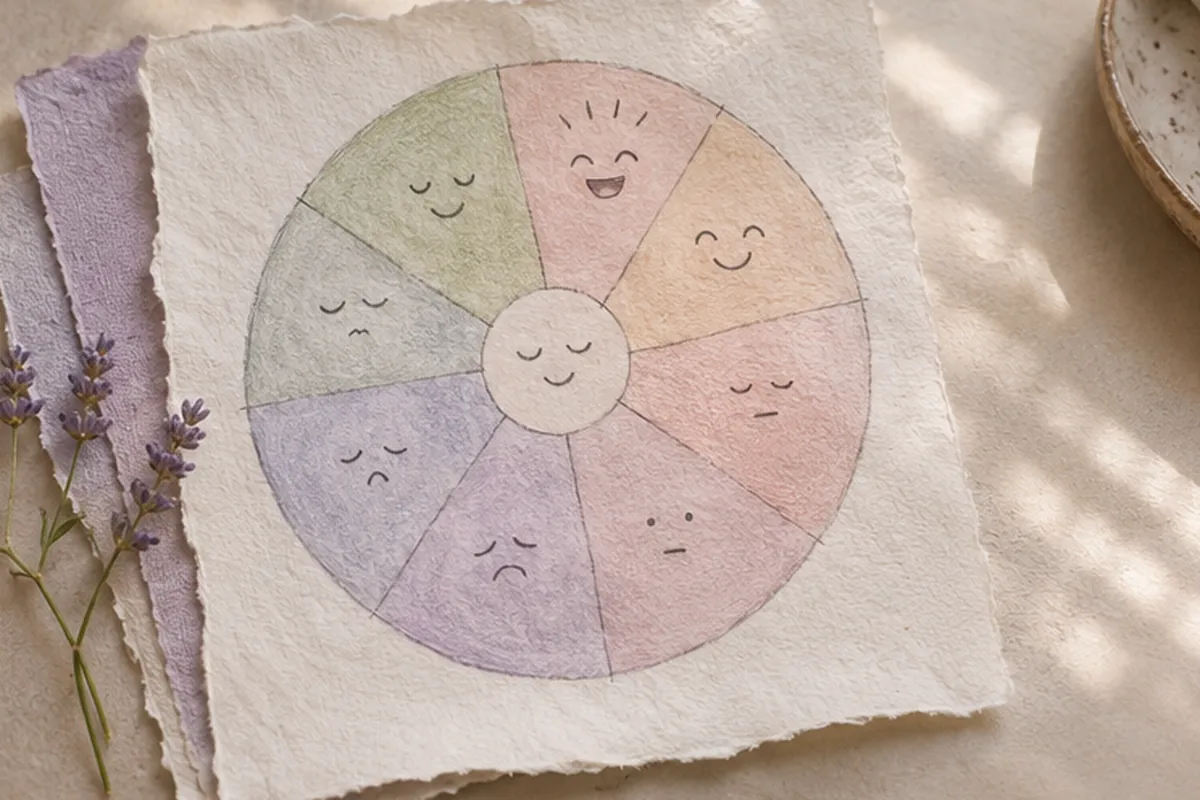
You can also use the wheel as a vocabulary prompt. Write broad terms around the outside and add two or three more specific words near each, then choose one for your dated log. When you use the wheel this way, keep the dated entries on a separate strip so you can tell what you recorded on which day.
7. A small leaf for every date
Arrange a row of leaf outlines for each week, with the date next to each leaf. Keep simple lines and enough room for a pencil mark. You can shade a whole leaf or color along the vein so shades stay distinguishable. Draw an extra outline in the margin for the key.
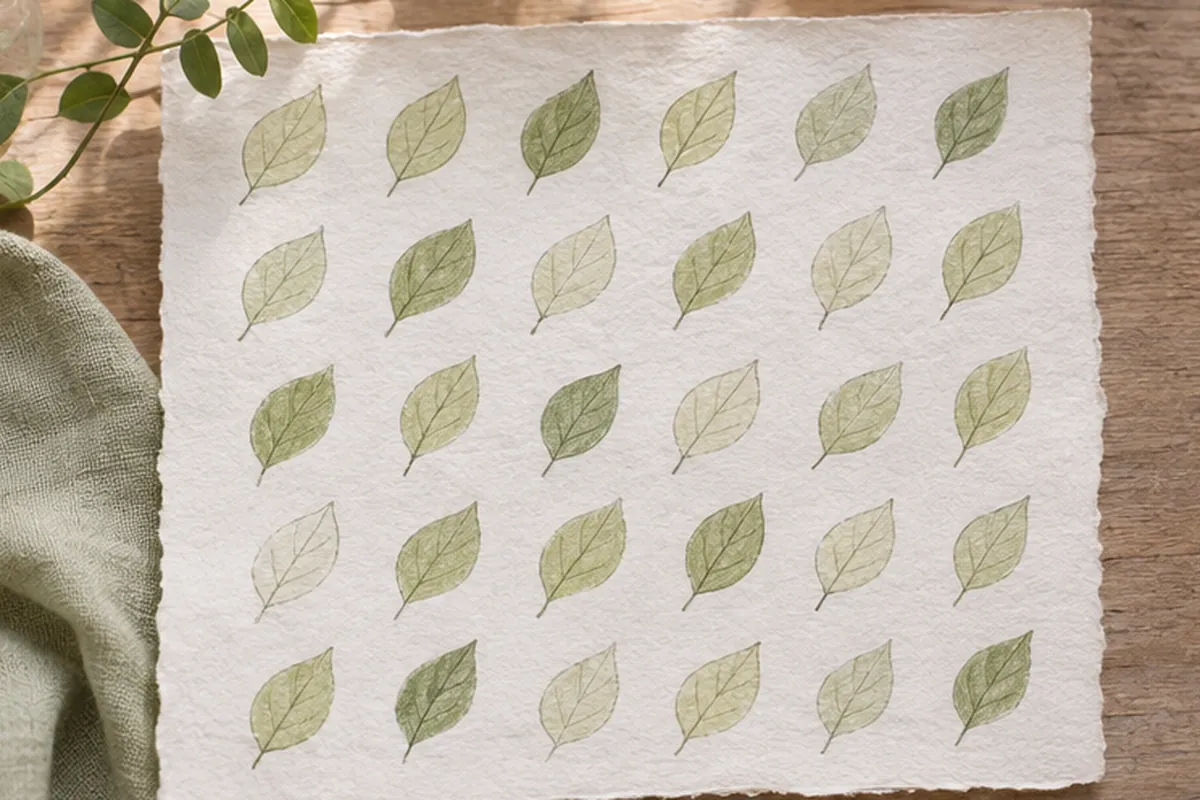
When you reuse the same template, change the paper tone or border instead of redrawing the leaves from scratch. Consider a stamp, a traced outline, or a clean master sheet you can copy. Decorative shapes work best if there is still a clear date label for each entry, especially when the month starts in the middle of a week.
8. Weather symbols with a written legend
Try small icons such as a sun, clouds, wind, or rain. Write your own meaning beside each one. A raincloud might mean you felt quiet and wanted some time alone, or it might mean you felt sad. The same icon can mean different things to different people, which is why the written key matters. Give mixed days a symbol of their own if you want to record them.

A small weather icon is quick to draw in an existing planner. Use a short note beside the icon when the image alone feels too broad. A line such as “content this morning, worn out tonight” can reflect a day that didn’t fit neatly into one box. Keep the weather icons in outline if you want to photocopy the page.
9. An envelope-shaped check-in page
Sketch a basic envelope with a flap and draw a row of five or seven boxes inside. Put the actual dates along the open edge. You can add a pocket onto the back of the page to hold longer notes on folded paper. Keep the pocket opening visible so notes can be removed without bending the page.
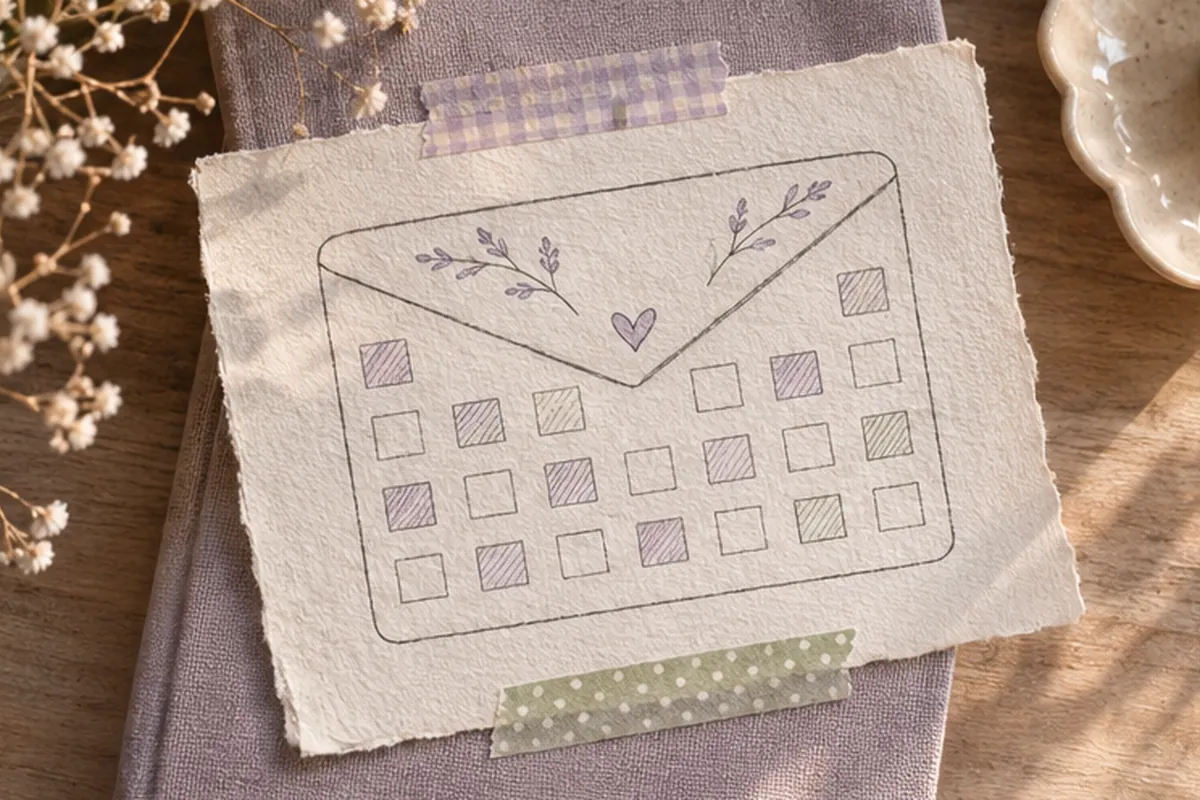
This is a useful layout if you like a physical place to put a thought down and come back to it. For a slim journal, a single small envelope stored at the back may be enough. Put the week or month on the pocket in pencil and only attach the edges you want sealed when you make it from scrap paper.
10. A black-and-white pattern key
Use a dot, parallel stripes, a single slash, a filled corner, and an open circle instead of colors. Draw one small example of each beside its label. Try all five in actual-sized boxes before you choose where to put the key. Two marks that look very different at large size can be surprisingly similar once you reduce them to a five-millimeter square.
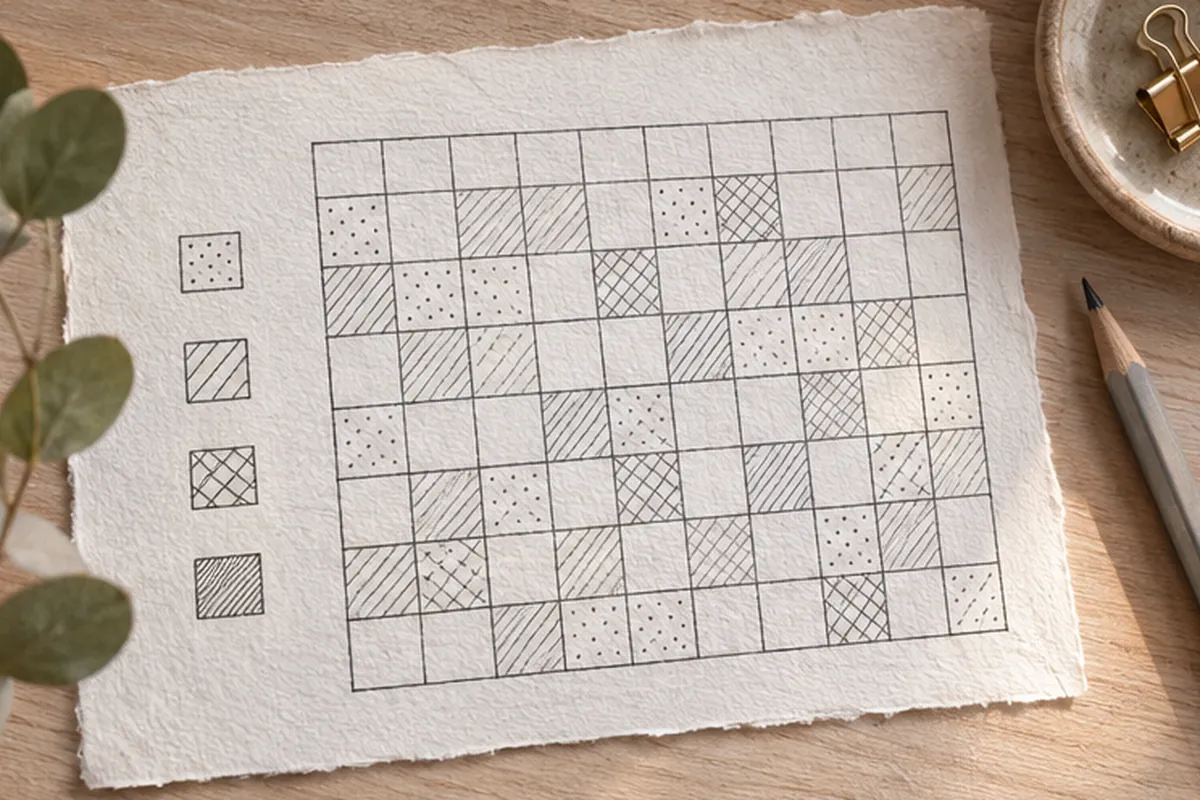
This version is useful if you share access to a monochrome printer, prefer a single pen, or find certain colors hard to tell apart. Reduce the key if the page gets busy. Three clearly distinct patterns and a word in the rare mixed box can make the whole sheet easier to reread.
11. A weekly tracker with optional context
Use a separate context field on the weekly page for something you are already curious about, like how a different work routine felt or whether you got outside. Write simple descriptions in ordinary words. For instance, “walked at lunch” or “worked late” adds context with very little effort. You can cross a row out if you do not want to record that detail.
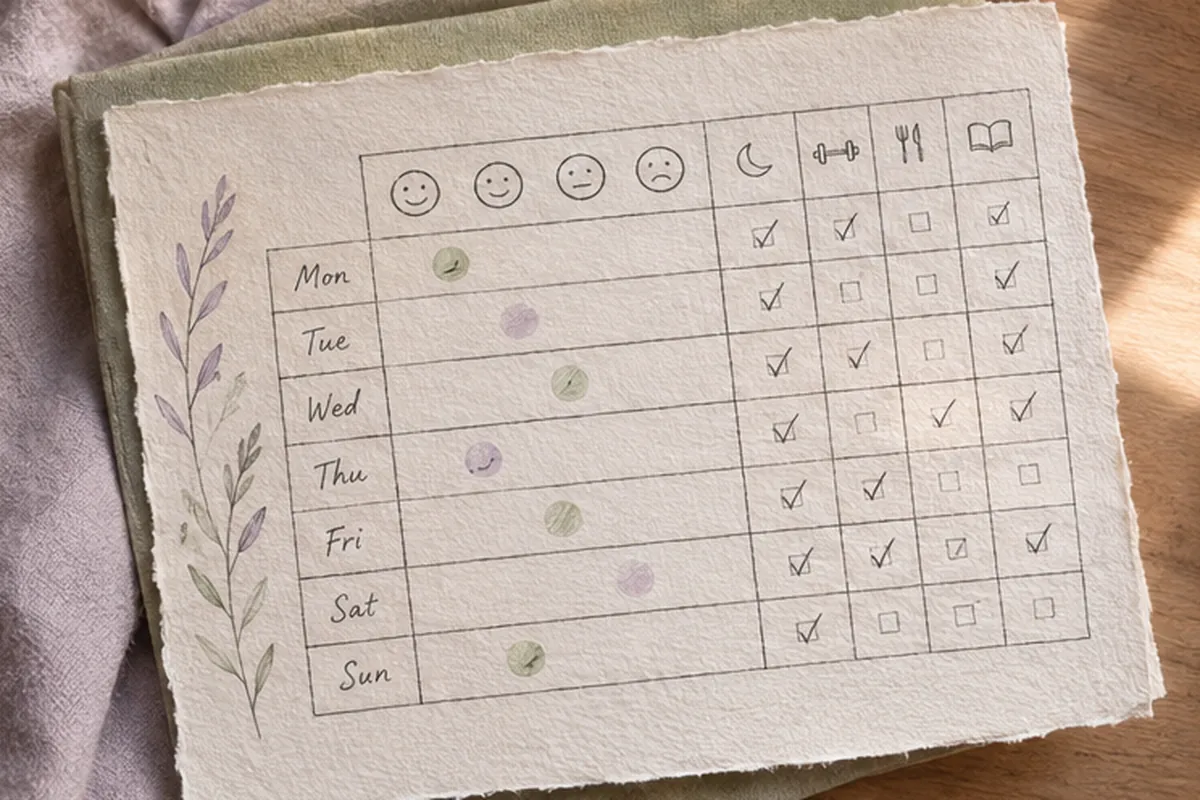
Review the notes as personal observations. Two things appearing on the same day can be a reason to reflect, and a chart by itself cannot explain why a feeling occurred. If tracking many habits makes the page feel crowded, keep the mood line and move other details to a separate note.
12. An undated check-in journal page
Leave the date line blank and write the date by hand only on the days you use the page. List a few prompts in the margin, such as “a feeling I can name,” “one thing that took energy,” or “one thing I want to remember.” Give each log two or three lines and use a simple border so it is easy to print again.
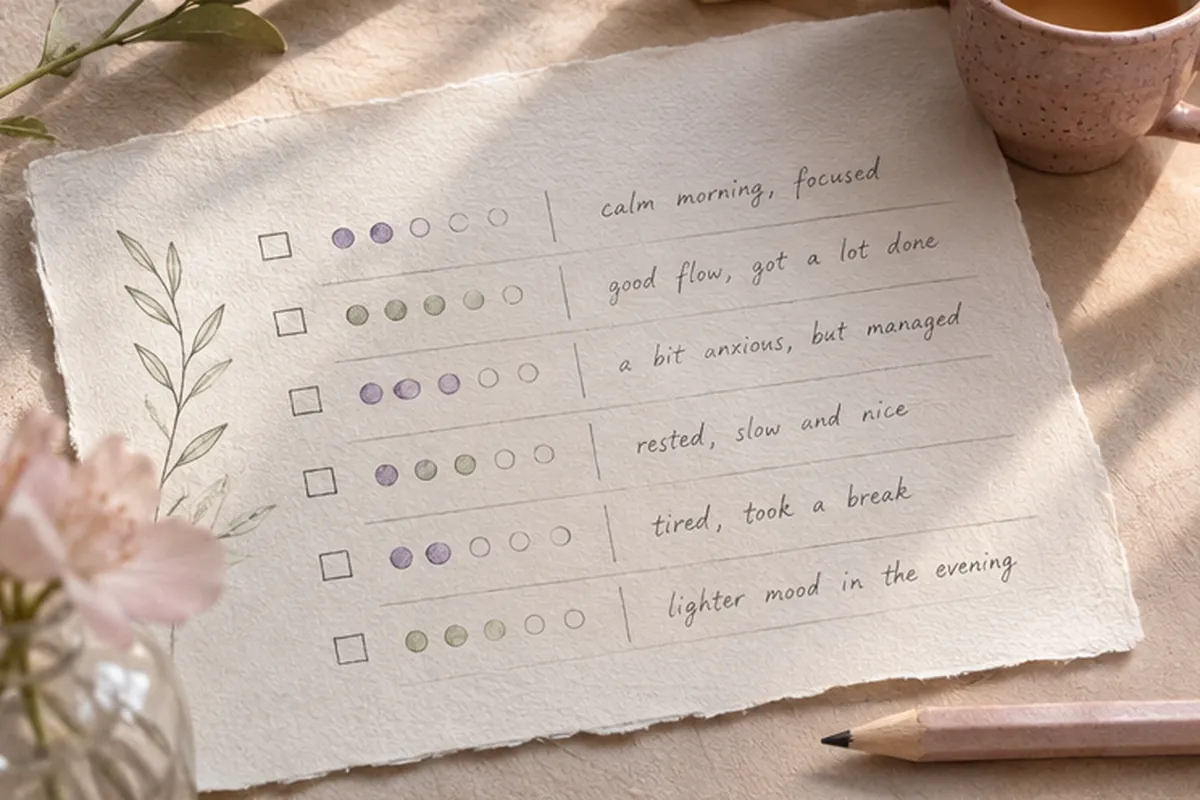
An undated page suits a journal you use on and off. It also leaves room between entries if you need more writing space. Save an unmarked master, or keep the PDF nearby, and reprint the same page whenever you want to start again. Switch to a compact weekly version if you later want regular dates along the edge.
Fit the tracker into the journal you already use
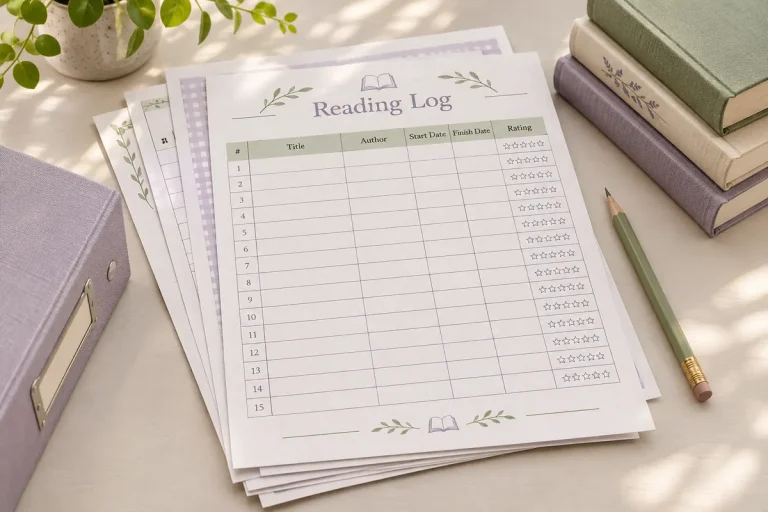
Put the tracker near a page you already open, such as your weekly planner or the front of your notebook. Copy a row of boxes onto your next spread if a loose sheet gets lost easily. If you like pages with a visual pattern, consider the same idea behind a bookshelf reading tracker: leave the marks open, and let ordinary entries create the design over time.
After a week, glance back at what you wrote and check whether the key described your feelings in language you actually use. You can change one label or swap a color for a pattern next week. A quiet page is often easier to keep on a desk. If you want to decorate, add a narrow border after printing so it does not shrink the spaces you write in.
If you already use a weekly planner, clip the printable behind the current week and keep the key where it remains visible after folding. A top clip leaves room to move the page without punching through the grid. For a ring binder, trim the outer edge first and line up the holes with a blank divider. Storing your tracker alongside these printable habit tracker layouts can help if you prefer to keep daily notes and routine checkboxes on different sheets.
If you want to try several layouts, use the weekly sheet first and keep only one entry per day for the trial. At the end of the week, circle the layout features you actually used. For example, you might keep the note space but replace five colors with three symbols. Transfer those choices to the next monthly sheet and leave extra room at the end for changes.
Frequently asked questions
Can I track more than one mood each day?
Yes. Use the morning-and-evening page when you want two time-based notes, or put two marks in a larger box if feelings overlapped. Give the second mark a consistent position in the box so you can recognize it later.
What if I miss a day?
Leave it empty or use a dash if you want to distinguish skipped entries from a blank template. Resume on the next date. A few blank days are normal in a personal notebook and you can keep using the rest of the page.
Can I print a mood tracker for a smaller journal?
Yes. Set the scale in your print preview and print a single test page. Check whether you can still write comfortably in the boxes and whether your binder holes would hit a date or note. A short weekly strip is often easier to fit than shrinking a whole letter-size page.