2027 Reading Journal Setup: 12 Creative Pages for Book Lovers
Start your 2027 reading journal with three pages: an annual book log, a short next-to-read list, and a monthly reflection. Add the other layouts when you have a question those first three cannot answer. A notebook that’s easy to use in February is more valuable than a beautiful year’s worth of pages you feel obliged to fill.
This 2027 reading journal setup has 12 layouts for tracking finished books, keeping reading notes, and choosing what to read next. Each can fit in a lined notebook, a planner, or a binder. Save a few blank pages for finding and adding sections later.
Choose a notebook and reserve your first pages
A plain notebook is enough. Try a small one if you read on a commute, or use a binder if you want to move book reviews between sections. Keep a pen where you read. Optional supplies include a ruler, pencil, and a few sticky tabs. Use separate colors only when they communicate something, like audio versus print or owned versus borrowed. For basic layouts and examples you can adapt, start with the beginner reading journal guide.
Write 2027 and your name or initials on the first page, then leave one or two pages for an index. Put the annual log near the front, and mark the current month with a movable tab. Choose the width of the title column by testing the longest title you can think of. If the space is tight, put the author beneath the title instead of making every entry smaller.
12 creative pages for your 2027 reading journal
1. A 2027 title page and reading intention
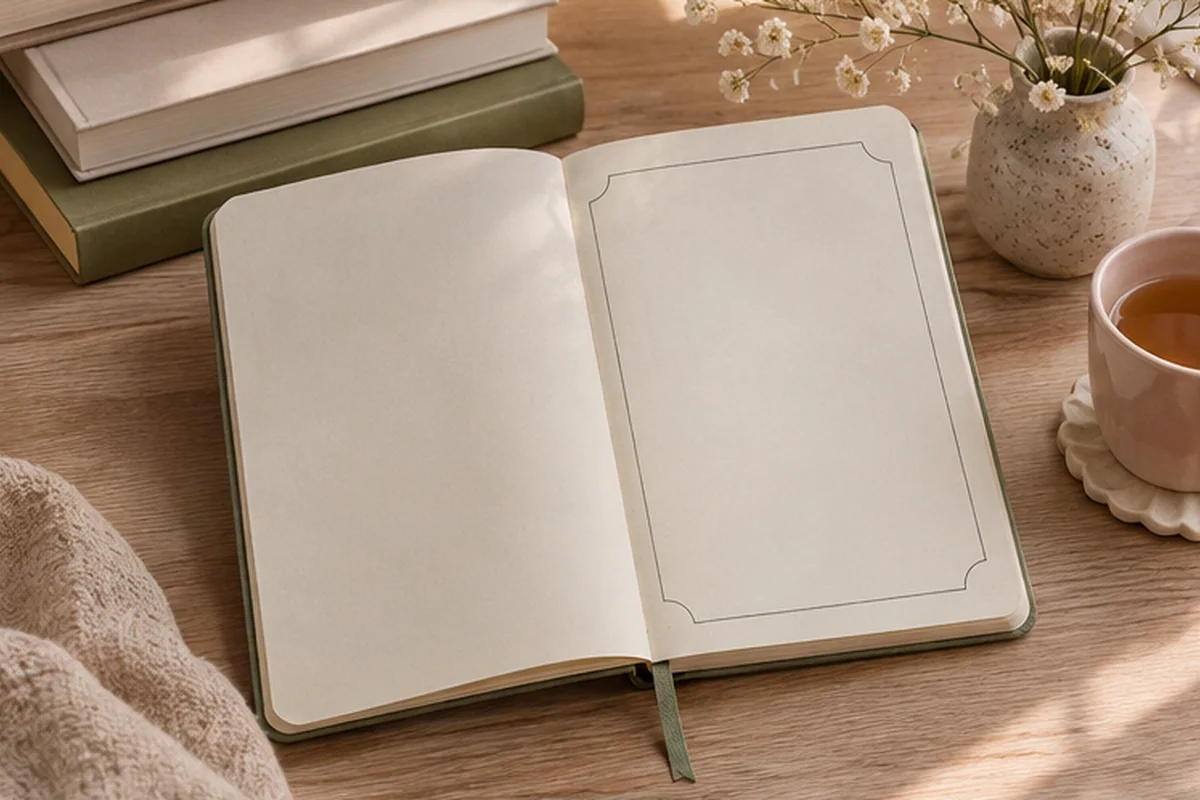
Write one short intention below the year, such as “Notice which books I keep thinking about” or “Make more room for audiobooks.” Give yourself room to revise it. Use a bold heading on ivory paper and a small stack of drawn books if you like a simple design. Reserve part of the bottom for a one-sentence December note you can return to later. If your book has a decorative front page, turn it into a quick contents page by adding two or three section names with their page numbers.
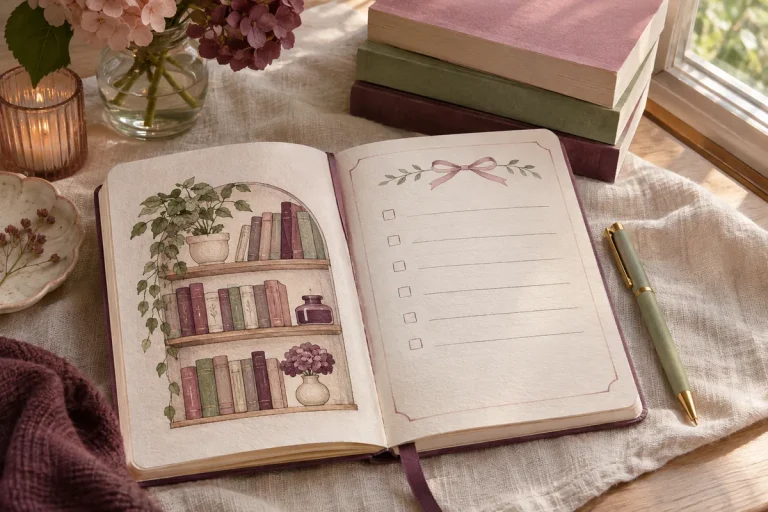
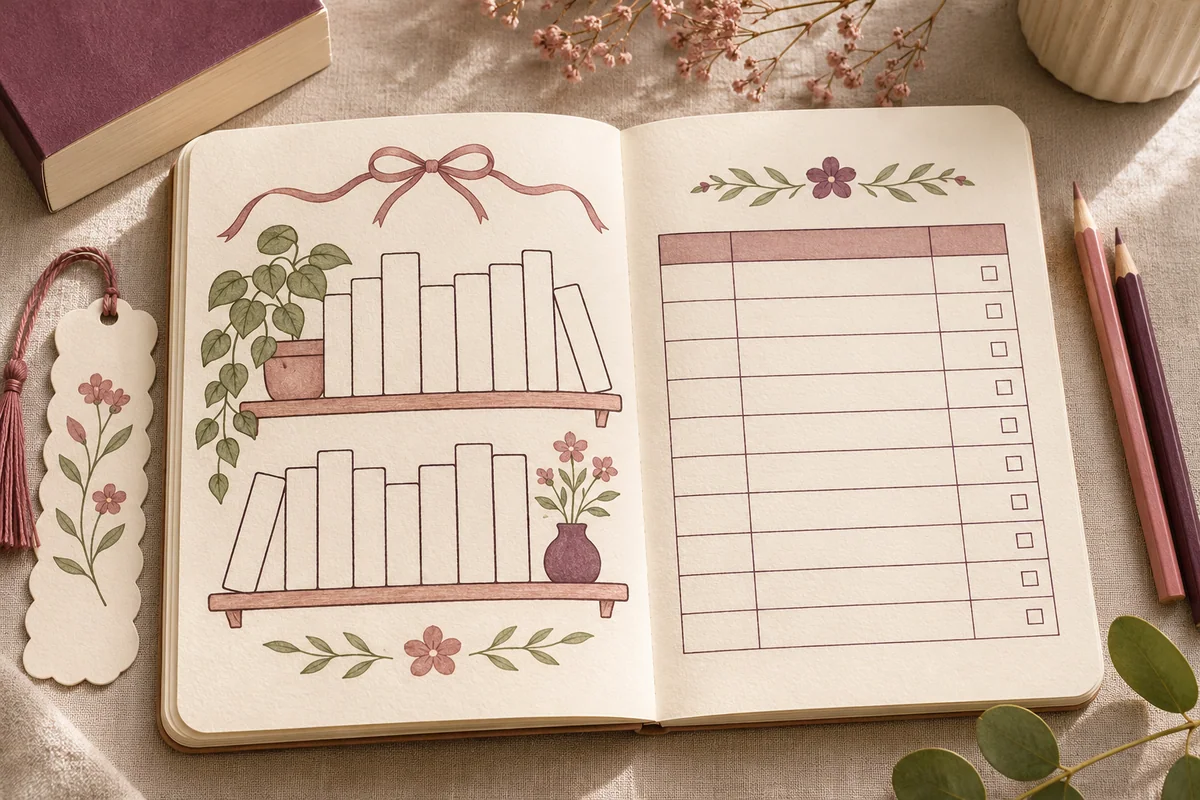
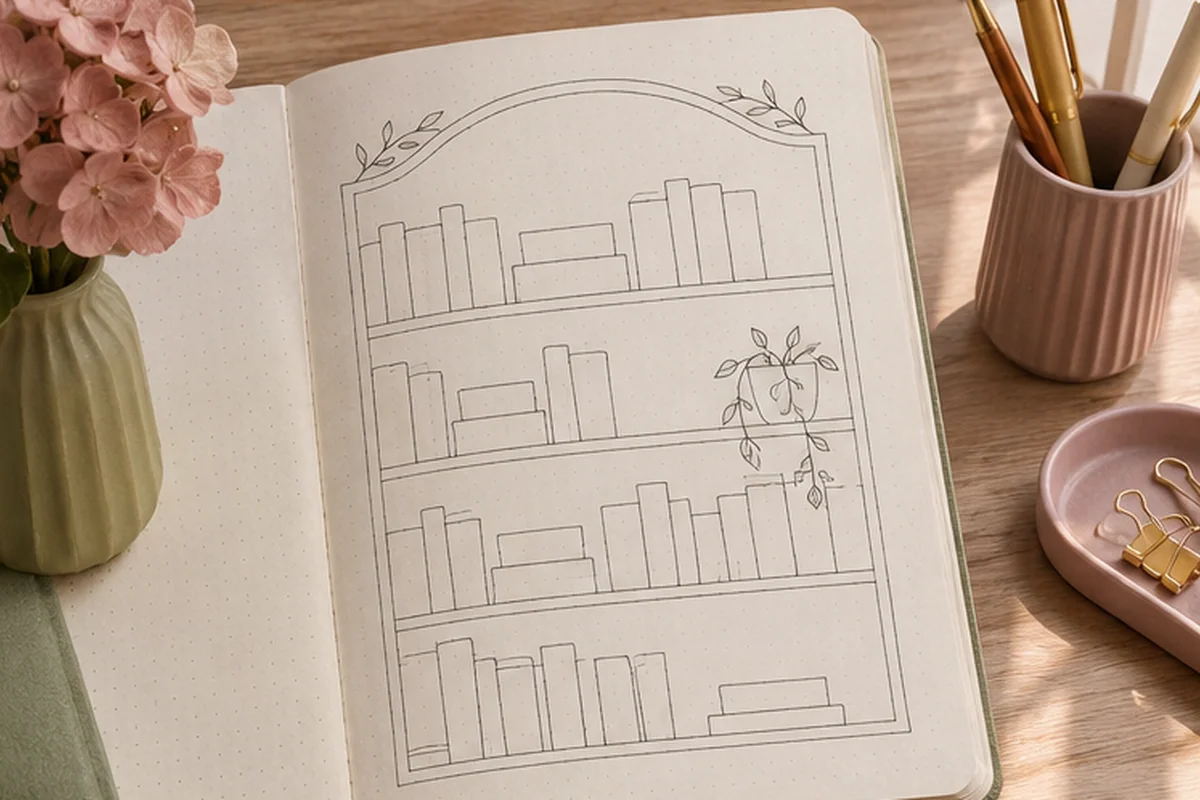
2. A bookshelf tracker you can expand
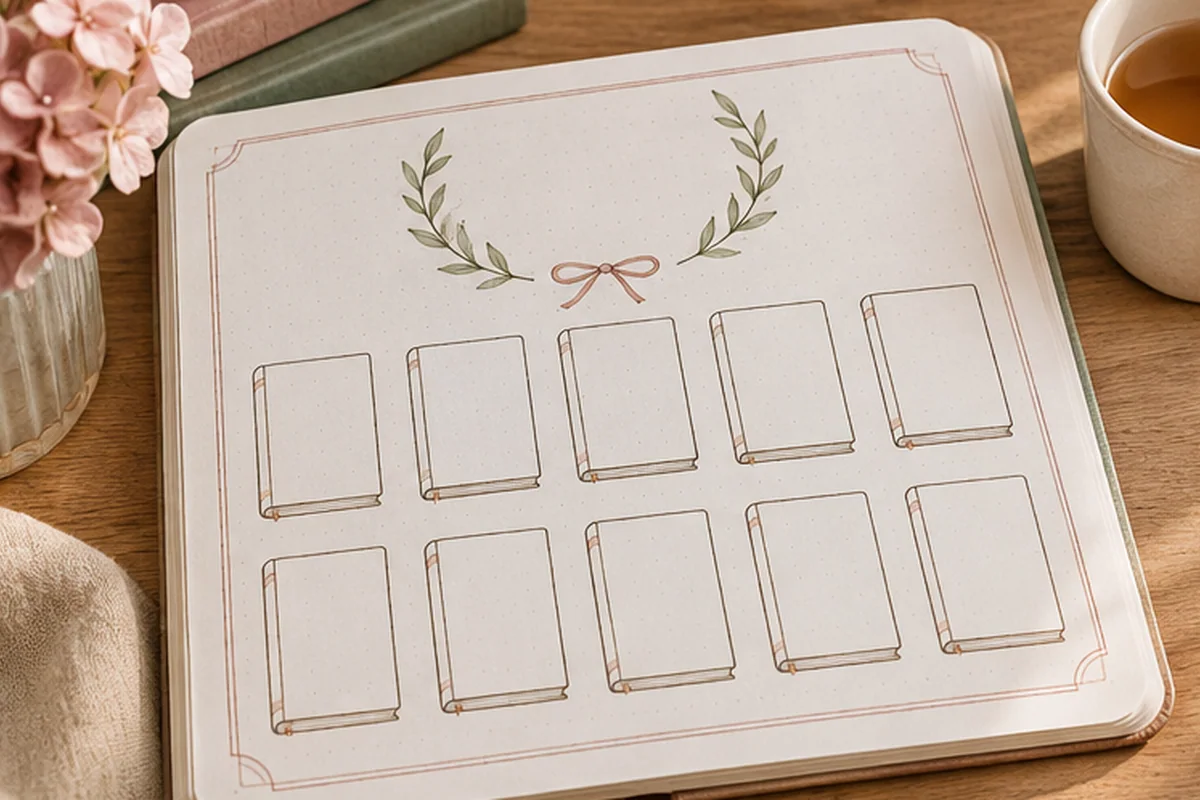
Draw two small shelves and leave room for one more. Add a rectangle for each spine and shade it when you finish a book. Number the spines and pair them with your book log if the titles are too long. Assign each shelf a purpose only if that helps. A shelf for “books I want to share” can be more useful than a shelf for every month. Use pencil for the outlines and a soft colored pencil for the filled spines. Keep one extra shelf blank to make room for an unusually busy reading period.
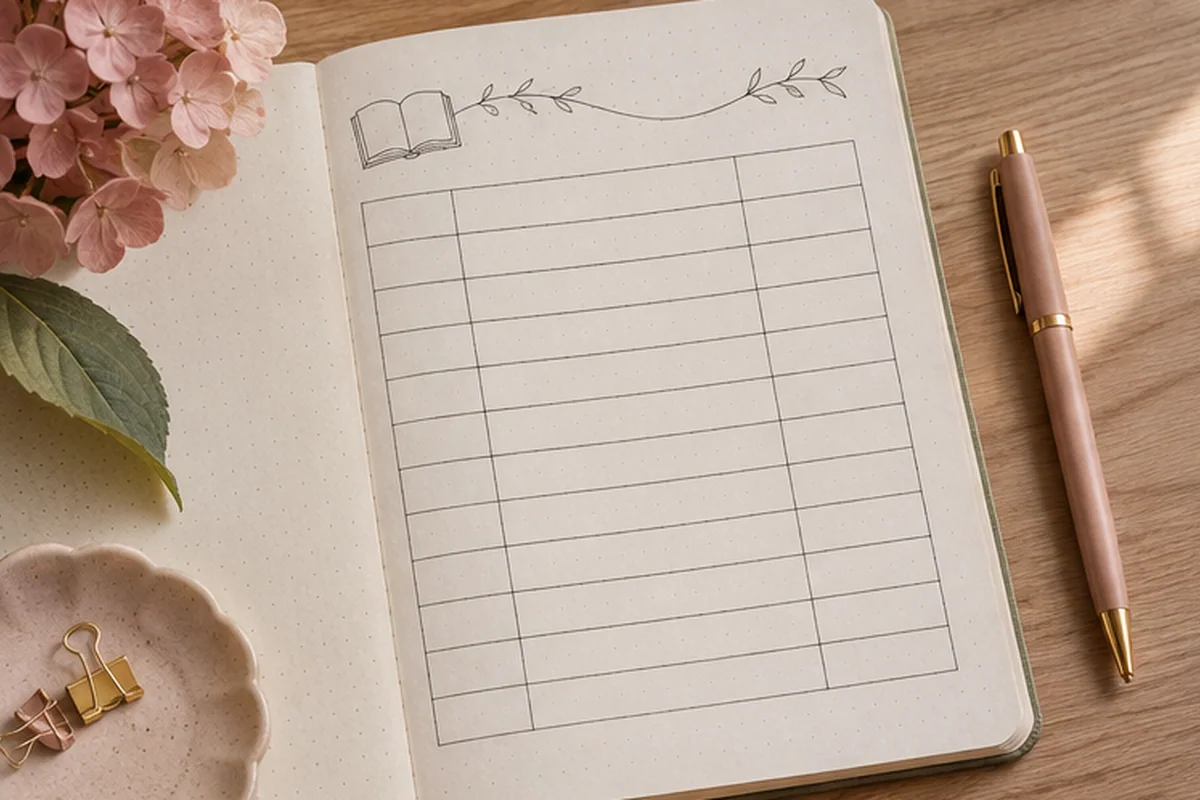
3. A finished-book log with useful details
Set up a table with date finished, title and author, and one quick note. The date can be as simple as “Jan 18.” Include a small format mark for print, audio, or digital if you want to notice patterns later. Write a short, searchable thought in the notes column, such as “remote setting, slow ending.” Reserve a small place to flag books you would recommend. Save longer reactions on a separate page so the log remains easy to scan when someone asks what you read last spring.
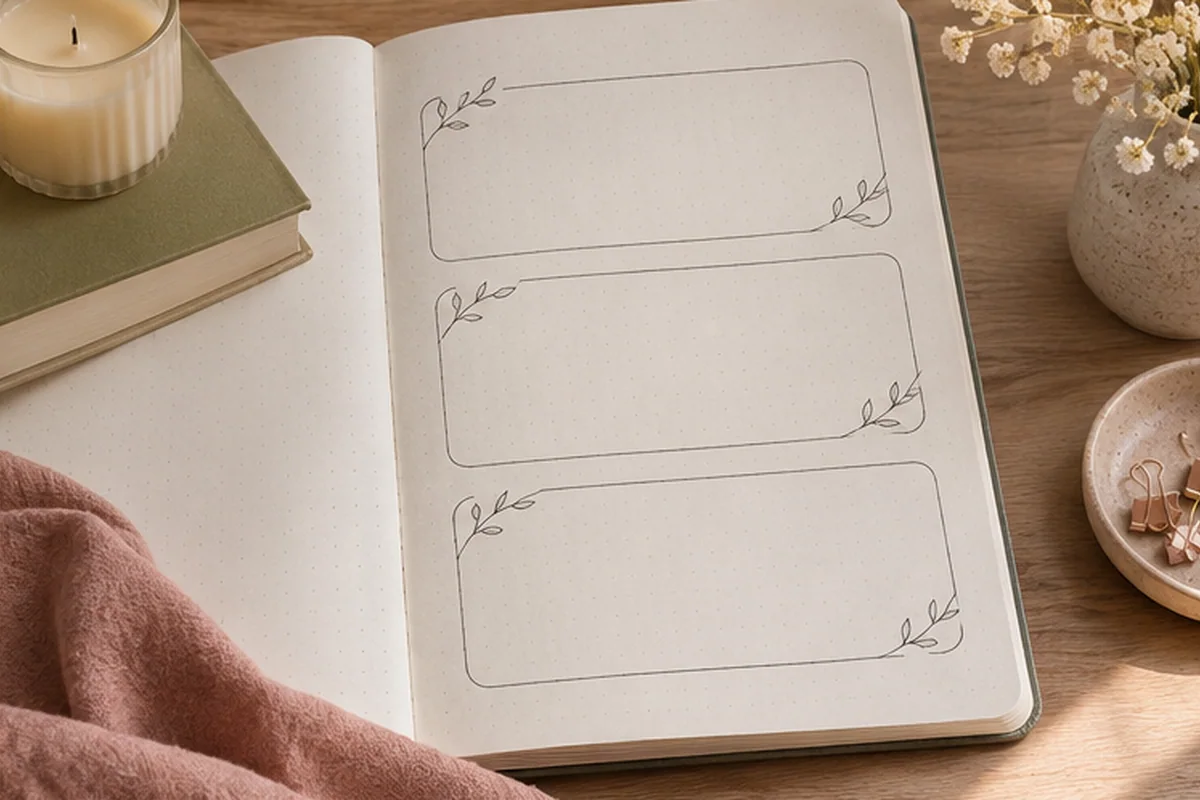
4. Seasonal reading goals
Choose one goal per quarter or season. Make it specific enough to try. “Read a short poetry collection in spring” or “Listen to one chapter on Sunday mornings” gives you a clear action. Beneath each goal, add a line for what will make it easier. You might put a library hold on the first book or leave headphones by the chair. Leave another line for what you learned. Change the remaining seasons if the first one teaches you that a goal was too vague, too much work, or less interesting than you expected.
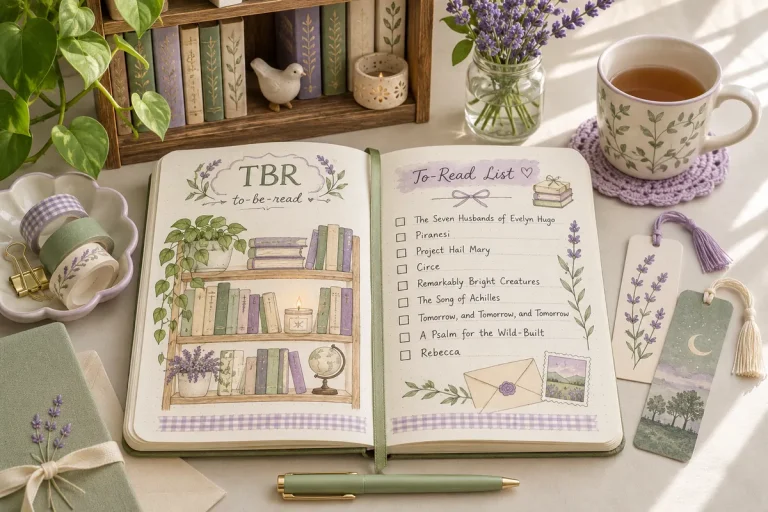
5. A movable next-to-read list
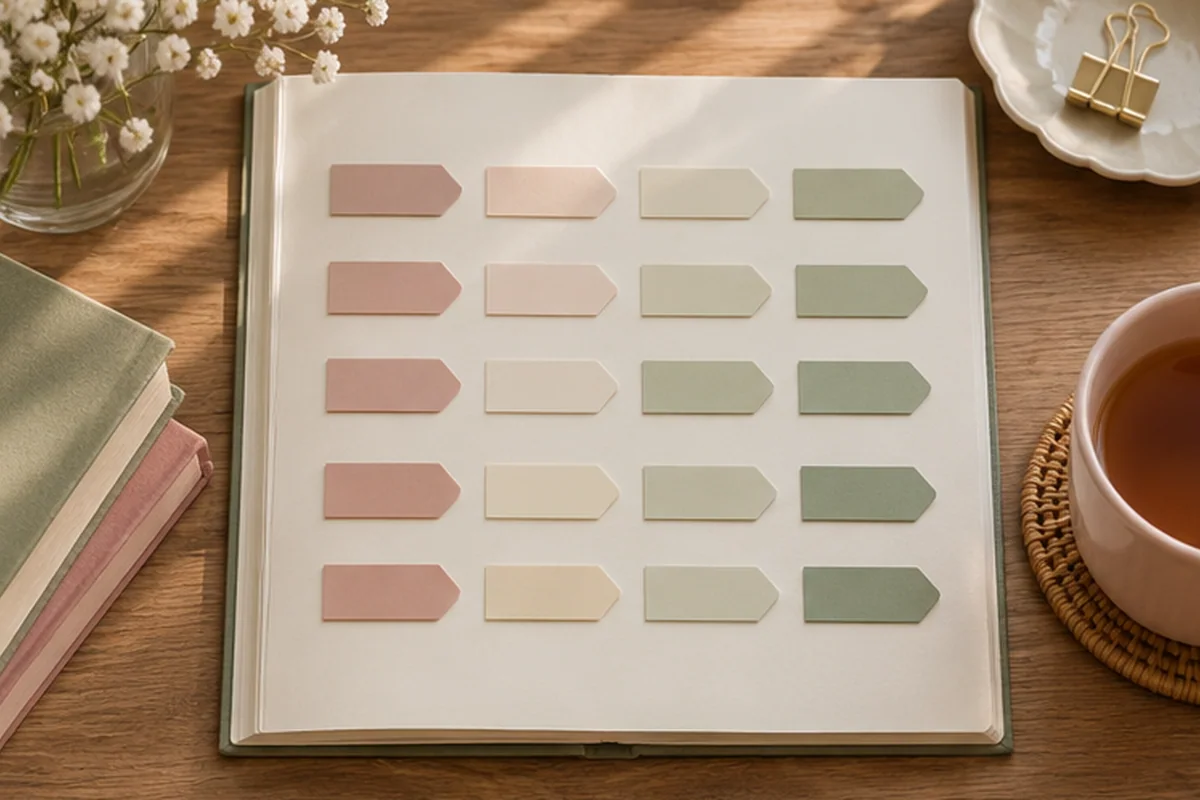
Divide one page into Next, Later, and Paused. Put three or four titles in Next and leave most of the page for later choices. A sticky note works for any title you expect to move. Include a tiny mark for a hold, book club deadline, or borrowed copy you need to return. Add one title you can choose immediately on a tight evening, such as a book you already own or a short audiobook from the library. Review the list monthly and retire entries you are unlikely to read soon.
6. A reading challenge with flexible prompts
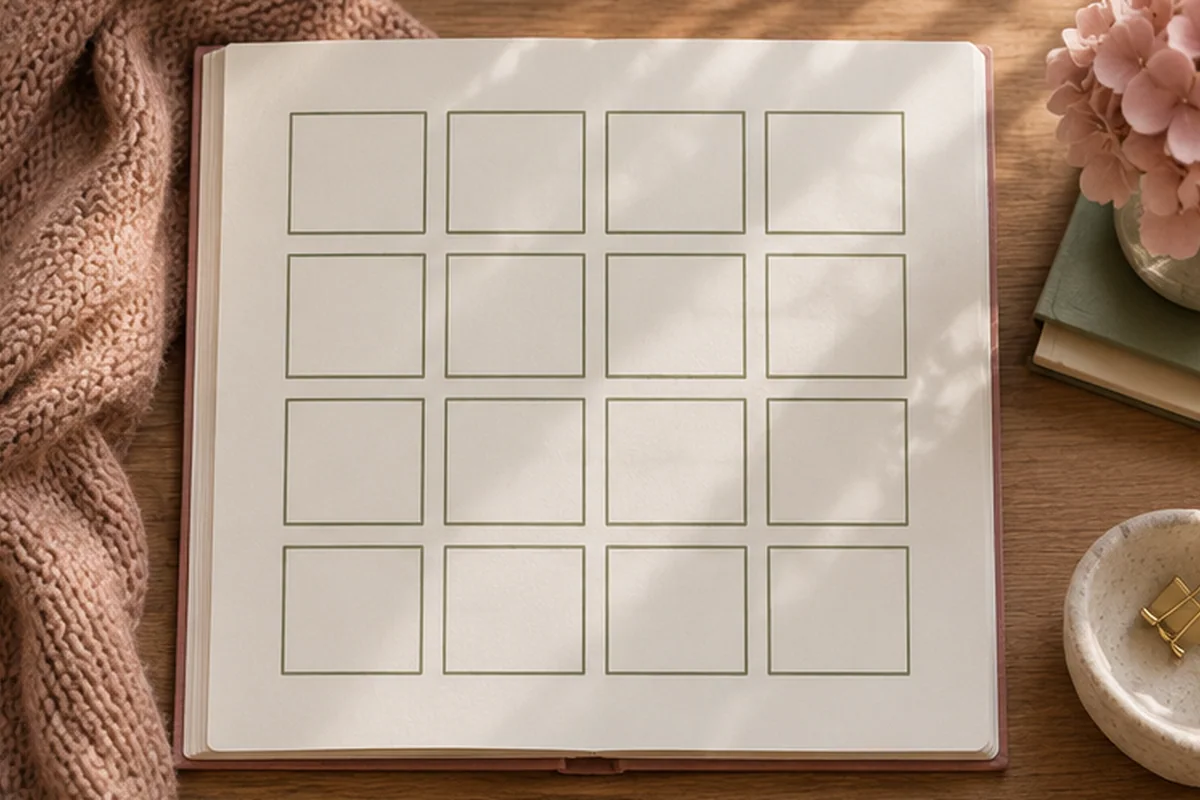
Draw a four-by-four grid and mix familiar choices with new ones. Use prompts that can apply to books you already plan to try, such as “a graphic novel,” “a story near water,” “an essay collection,” or “an author you haven’t read in years.” Keep a short numbered log next to the grid for book titles that will not fit inside the boxes. Decide whether one book can fill multiple squares and note the rule in your journal. If a prompt stops being interesting, change it as part of the challenge.
7. A three-question monthly reflection
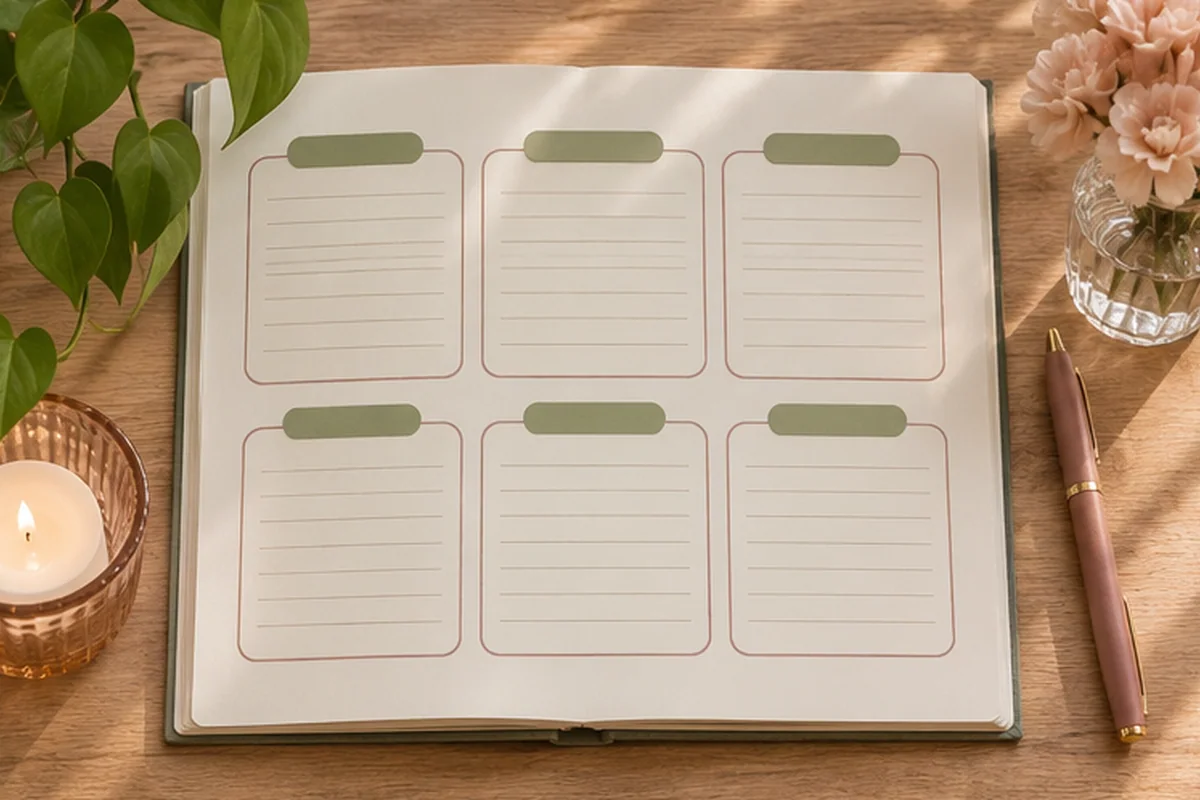
At the end of the month, write what you finished, what stayed with you, and what you want to try next. Use three boxes or three lines, depending on how much you want to write. A book you set aside can still teach you something, so leave space for a note such as “difficult to follow in audio” or “better on a quiet Saturday.” Review this page before planning your next reading month. A short week-by-week habit sheet can complement this spread if you want to remember when those sessions happened. See the printable weekly reading tracker.
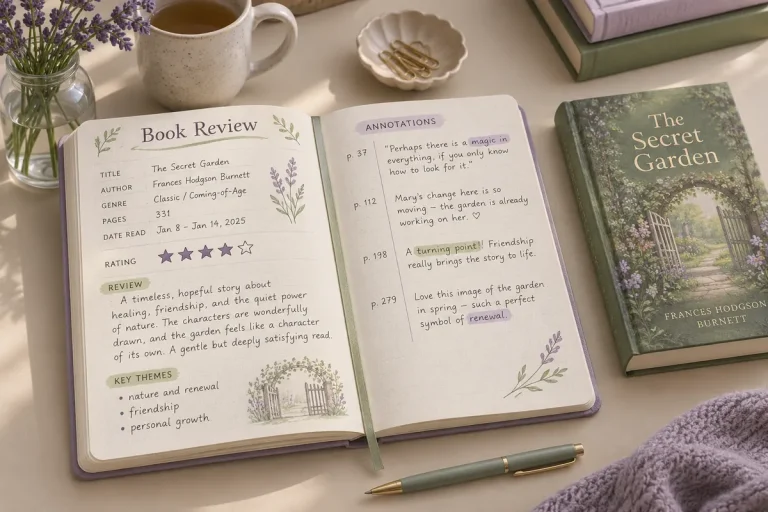
8. A short review page for standout books
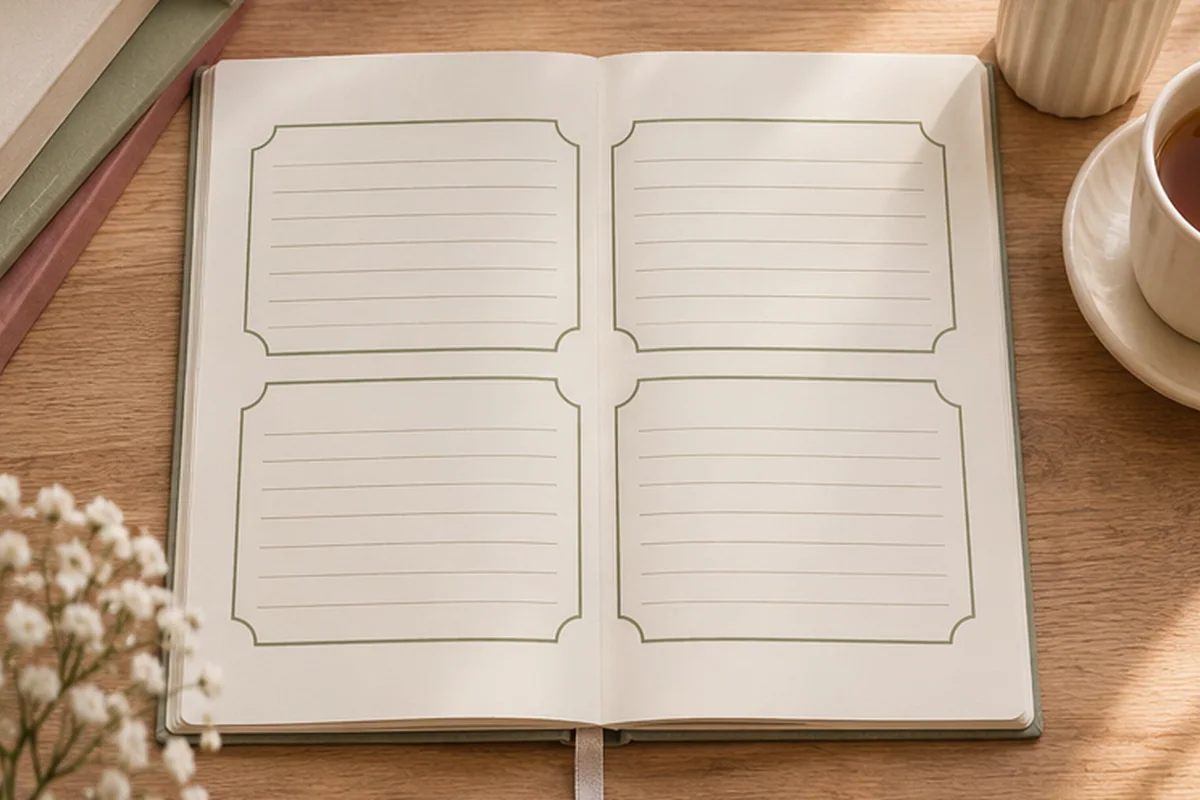
Put the title, author, and format at the top. Use four small blocks below: what it’s about, what worked for you, what didn’t, and who might enjoy it. One sentence per box is enough. If you want to include a spoiler, put it under a folded tab or write a clear warning. The recommendation box is the one you will likely reuse when someone asks for a suggestion. If you keep track of book club picks, add a fifth prompt with the one question you most want to discuss.
9. Quotes and passages worth finding again
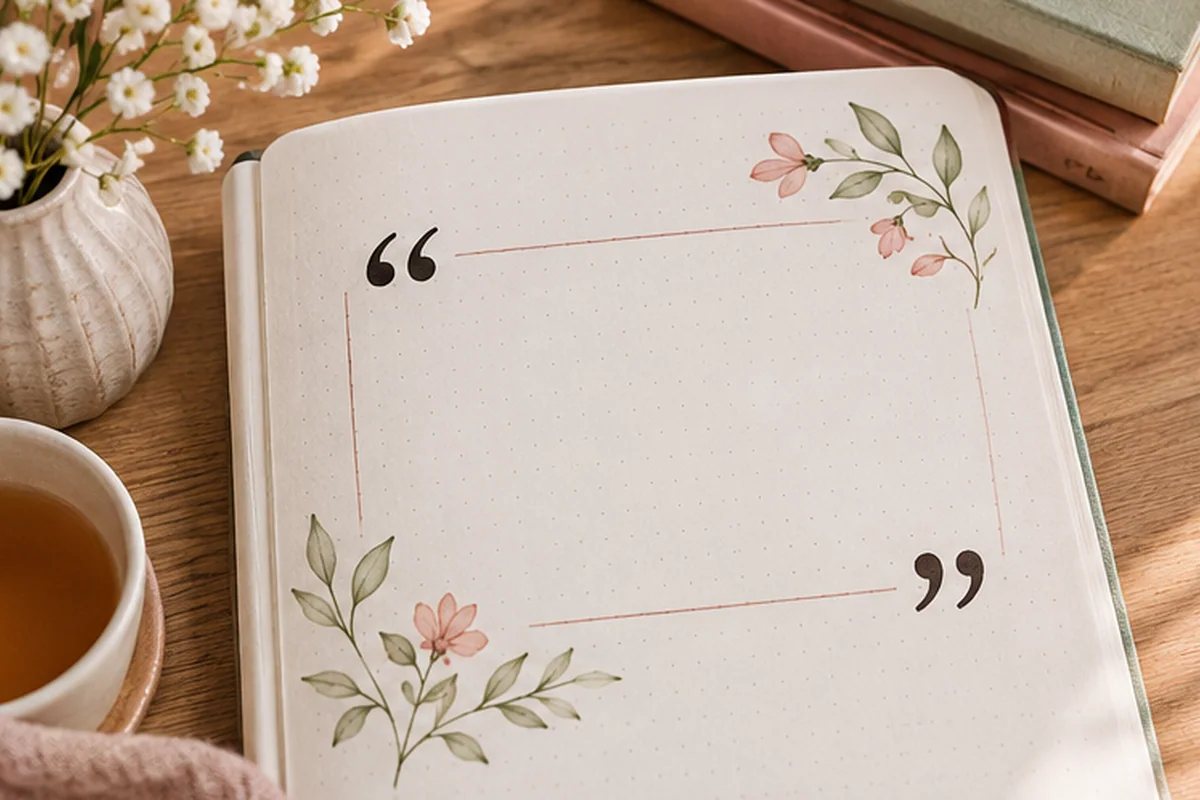
Use a narrow margin for book and page references and a broad area for the quote and your response. For audio, a chapter or rough timestamp is a better locator than a page number. Put your own note in a different ink or on another line so it is clear what comes from the book. Try one theme per page if you collect a lot, such as dialogue, places, or lines that made you laugh. Leave a few blank entries at the bottom to keep related passages together.
10. A genre or format tracker
Pick one question and give it a small chart. For genre variety, make a row for each category and add a dot when you finish. For formats, track print, digital, and audio separately. Note how you handle books with several genres. If one book fits history and memoir, you can select a primary label or record both and note the overlap. Keep a text label even if you use colors. This remains easier to read if your inks are close in tone or if you change pens halfway through the year.
11. A series checklist with space for new books
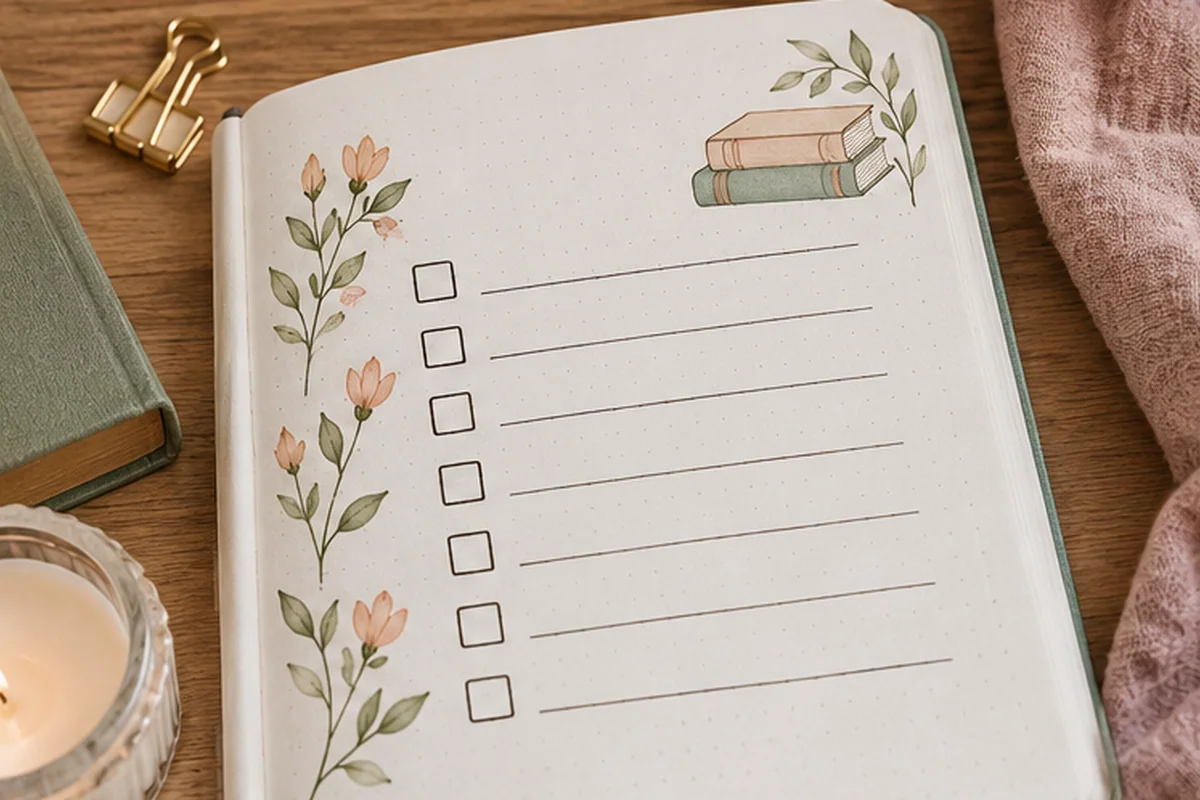
Write each series name, order, and one small checkbox per title. Use a dot for started and a check for completed if you often read several books at once. Different editions and companion books can make an order confusing. Note whether you’re going by publication order or series chronology. Leave a few lines for future titles, and write “novella” beside a shorter companion story if that changes when you want to read it. Use a separate row for a reread so the original mark still tells your history.
12. A year-end favorites and discoveries page
Make room for a favorite book, an unexpected discovery, a title you would gift, and an author you want to read again. Start taking quick notes in your monthly recaps so you don’t have to recreate the year in December. Leave room for a “favorite reading moment” that describes the experience rather than a title. Turn the page into a letter to your next-year self with one thing to keep and one thing to change. Connect the reflection to your first-page intention so the journal has a clear ending.
Build a first month you can actually maintain
For the first few weeks, use just the next-to-read list and the finished-book log. Put one title you are already reading under Next and leave a second choice open. At the end of the month, add a reflection next to the log. If you filled the same column every time, keep it. If two columns stayed blank, decide whether they are worth keeping. A smaller log can be faster to update and easier to read.
Start a new monthly page when you need it. If you like preprinting calendars, use the dated January sheet and one undated worksheet from the 2027 printable planner collection, then print more when you know what fits. Keep blank photocopies of layouts you reuse beside the notebook rather than drawing the same boxes from memory every month.
Keep library loans and recommendations easy to find
If you borrow a lot of books, reserve a short space at the bottom of your next-to-read page for only the books currently on loan. Write due dates in pencil and erase them when you return a book. Put a small library symbol beside titles on hold. This keeps a due date from disappearing in a list of recommendations. When a hold becomes available, check the list before deciding what to move to Next.
For recommendations from friends, keep the source with the title. “Maya, slow mystery with a seaside setting” will help when you are deciding what to read six months later. Add the date only if it helps you find a message or discussion. After reading the book, move the useful detail into your finished-book log. Leave the recommendation list for books you are still curious about so it stays inviting to browse.
Make the pages work for audio, ebooks, or book clubs
A listening log can record time, chapter, and the place you stopped. For ebooks with varying page numbers, use a section heading or a short searchable phrase. For book clubs, give the book and meeting date their own line, prepare two discussion prompts, and leave a space to note a different response you heard. Decide which events and editions you want to remember before designing an extra column for them.
If you read several formats, keep one log and write an abbreviation in the margin. Separate notebooks work if you use them, but a single chronological list makes it easier to remember what you read during a particular month. You can add pages later whenever a format starts to need more space.
A sample January using just three layouts
Set up the Next list on January 1 with one book you already have, one library loan, and one choice you can replace. If you read for a few minutes while the kettle boils, note the routine on a sticky tab. When the loan comes due, open the finished-book log and record either the finished date or the point where you paused. You can keep this entire first month on two facing spreads. It is enough to find your next book and remember the last one.
At the end of the month, add a reflection with one completed item, one surprise, and one adjustment. For example, you could write, “Finished one mystery. Short chapters fit well after work. Borrow another book I can read in pieces.” That note gives the next month a practical starting point. If you did not finish anything, write what you read and whether it suited the time you had. You do not need a completed title to learn how your routine works.
Adapt the journal for a busy season
If you are using a small notebook, use half a spread for a month instead of reserving a page for a log that might contain one or two entries. Put a tab along the edge where you stopped last time. Use a pencil for temporary holds and a pen for the titles you want to preserve. The notebook can respond to a quieter or busier month without needing to restart the entire layout.
If your log has expanded across several pages, reserve an index line for each volume or month. Use a short label such as “March to May log, 12–15.” Consider one divider for reading notes and one for planning rather than making a divider for every one of the 12 suggestions. A shorter list helps when you want to find an unfinished book or recommendation quickly.
Decide what to carry into 2028
In December, flip through the monthly reflections and mark pages you returned to for a reason. Make a short keep, change, and drop list. Copy the recurring fields, such as titles and recommendations, and skip an unused chart you made only because it looked neat. If one part of your journal remains useful beyond 2027, store that spread separately or make a blank photocopy for the next notebook.
Frequently asked questions
Can I start the journal after January?
Yes. Date your first entry when you start and leave previous months empty. Add a few remembered favorites if you want. There’s little need to reconstruct a full list simply to make a calendar look complete.
Should I make all 12 spreads in advance?
Set up the two or three you’ll use this month. Make the reading challenge or annual log early if it helps you. Add reviews, timelines, and niche trackers after you learn which books and habits actually call for more room.
How do I keep a reading journal from feeling like homework?
Write one useful thought and stop. Keep tracks of what helps you choose, remember, or recommend books. Try keeping the journal open to the current spread so writing a note takes one step. Drop counts or goals when they stop answering a question you care about.
Can I include books I didn’t finish?
Yes. Give paused books a separate mark and note where you stopped. A short reason such as “want to try print” or “library loan expired” will help you decide whether to return to the book later.